Potty training a puppy works best when the whole family knows what happens next. A puppy cannot organize bathroom breaks around school drop-off, meetings, or soccer practice, so the first step is building a routine that makes those breaks possible.
For busy families, that means frequent opportunities to use the right spot, close supervision indoors, and backup help when no one can be home. House training a doodle puppy also takes patience: a clever puppy still needs time to develop physical control and learn your household’s routine.
Start with events, then add the clock
A puppy potty training schedule should respond to what your puppy is doing. Offer a bathroom trip after waking, eating, drinking, and active play, as well as before bedtime. The AKC (American Kennel Club) potty training guide recommends these frequent opportunities and arranging help when your schedule cannot accommodate them.
During awake periods, use regular reminders as a starting point and take your puppy out sooner when needed. Do not rely on an age-based bladder formula as a deadline your puppy must meet. Your puppy’s actual pattern is more useful than an estimate.

A realistic sample day
The example below is a planning template, not a maximum holding schedule. Add bathroom trips after every nap and whenever your puppy signals a need. Meals should follow your puppy’s established feeding plan and veterinary guidance.
- On waking, around 6:30 a.m.: One adult handles the first bathroom trip before breakfast preparations.
- Breakfast and getting ready: Feed on the usual schedule, offer another trip afterward, and supervise while everyone gets ready.
- Before the household leaves: Offer a bathroom trip and hand off care to the person covering the morning.
- Morning care period: Caregiver provides frequent trips, including after waking and play; records successes and accidents.
- Midday: Follow the feeding plan, offer bathroom opportunities, and confirm who covers the afternoon.
- Afternoon and school pickup: Take the puppy out before starting another busy transition; supervise greetings and play.
- Dinner and evening: Continue trips after meals, naps, and activity; keep responsibility assigned to a named adult.
- Just before bed: Offer a final trip and prepare for overnight care.
The morning and afternoon care periods need real coverage. A single lunch visit may not meet a young puppy’s needs during a full workday. Before bringing your puppy home, identify a household member, trusted caregiver, or suitable service who can provide the required breaks.
Potty training tips that make each trip easier
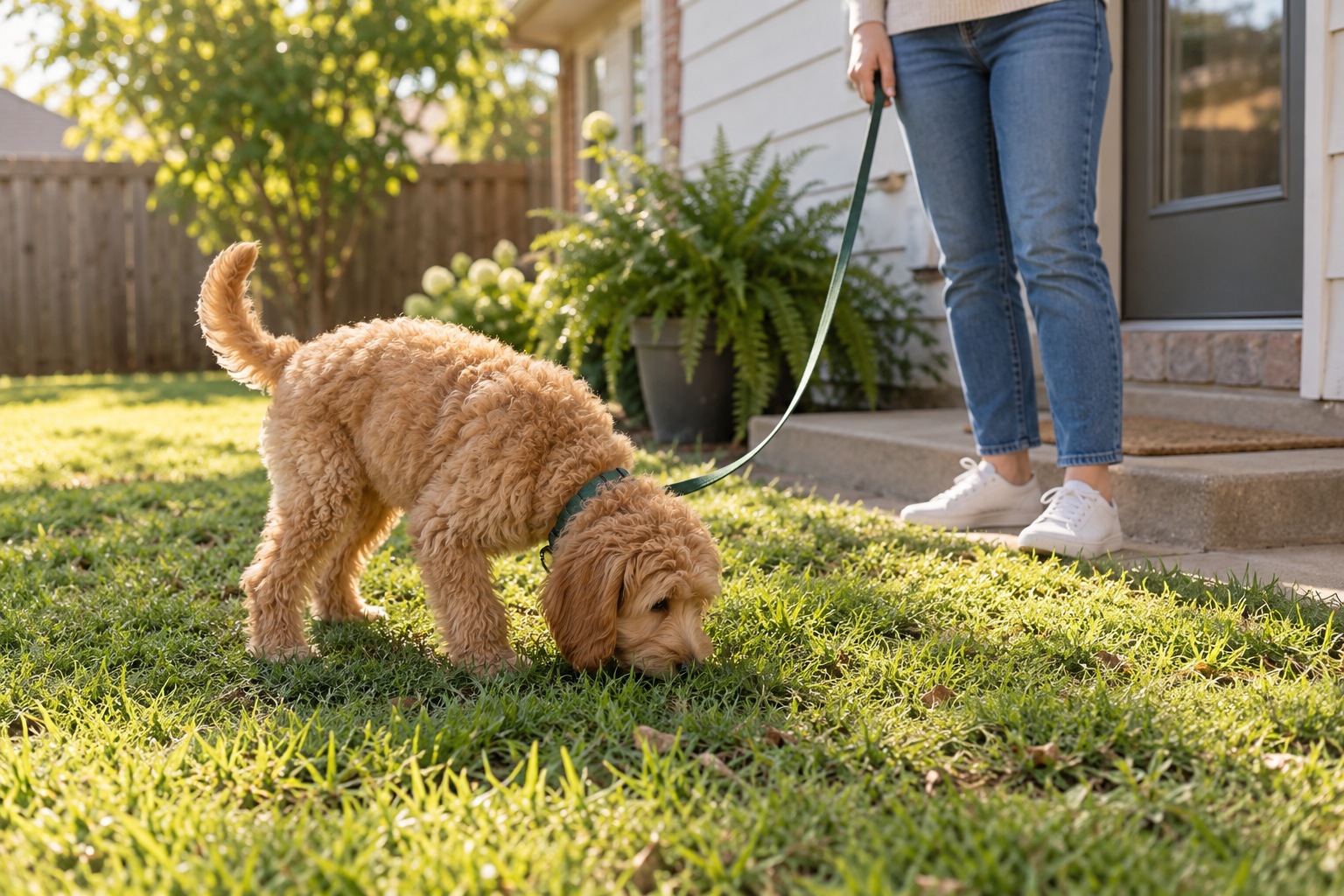
Choose a consistent toilet area and accompany your puppy. Give your puppy a few quiet minutes, then reward immediately after elimination, while you are still outside. If nothing happens, return indoors with close supervision and try again soon. Veterinary house training guidance explains why supervision and well-timed rewards matter.
Keep supplies by the exit: leash, cleanup bags, and a way to give a small reward promptly. Ask your veterinarian which outdoor locations are suitable while your puppy’s vaccination series is underway.
Plan nighttime potty training before the first night
Some young puppies need overnight bathroom trips. Arrange the sleeping area so you can hear your puppy, and decide which adult will get up. An alarm can help you provide a break before an expected accident; adapt its timing to your puppy’s needs rather than insisting on a fixed interval.
Keep nighttime outings quiet and return to the sleeping routine afterward. The AKC’s daily puppy routine recommends quick, uneventful overnight breaks when a puppy cannot yet make it through the night.
Do not try to solve a care-coverage problem by withholding water. Ask your veterinarian about any concerns involving thirst, urination, or overnight needs.
What to do about puppy accidents in the house
If you catch an accident starting, calmly guide the puppy to the toilet area and reward finishing there. If you discover it afterward, clean it and adjust the plan. Scolding, striking, or rubbing a puppy’s nose in a mess does not teach the desired location. Veterinary puppy potty training advice emphasizes calm redirection and avoiding punishment.
Use an enzymatic cleaner suitable for the surface and follow its instructions. Consider what happened just before the accident: a nap, a drink, a game, or a missed handoff? That gives you something specific to change.
Use a simple family handoff log
For the first several days, record four things: time, activity, bathroom result, and next caregiver. For example: “10:10 a.m., woke from nap, peed outside, Sam covering until noon.”
This prevents two common household mix-ups: everyone assuming someone else took the puppy out, or nobody realizing that the puppy has just woken up. Look for patterns before extending time between trips or allowing more indoor freedom.
A crate or pen is a management tool, not a replacement for care. Introduce confinement positively and arrange breaks that meet your puppy’s needs. Seek veterinary help for straining, blood in urine, unusual thirst, repeated diarrhea, or a sudden loss of previously reliable habits. The AKC’s training timeline also recommends a veterinary check when progress stalls.
How Our Program Helps
At Red Barn Doodles and More near El Reno, Oklahoma, we value thoughtful family matching and transparent conversations before a puppy comes home. Our About page describes our family setting and early socialization. You can also meet our Parents and ask questions about an individual puppy.
When considering any breeding program, ask how puppies are raised, what information families receive, and what support is available after pickup. Tell us where you would like guidance so we can discuss your questions. Planning ahead gives your family a clearer starting point for the transition.
Frequently Asked Questions
How often should I take a new puppy outside?
Offer frequent opportunities, including after waking, meals, drinking, and active play, and before bed. Use your puppy’s signals and record of successes to adjust the routine. Ask your veterinarian about individual needs and appropriate outdoor locations.
Can a puppy wait until I get home from work?
A full workday may be longer than a young puppy can manage between bathroom trips. Arrange a caregiver who can provide the breaks your puppy needs. A crate does not replace supervision, companionship, or bathroom care.
What should I do about puppy accidents in the house?
If you notice an accident starting, calmly guide the puppy to the toilet area. If you find it afterward, clean the spot and review the routine. Avoid punishment and look for a missed break or handoff you can improve.
Will nighttime potty training require an alarm?
An alarm can help when a puppy needs an overnight trip. Decide who will respond, keep outings quiet, and adjust the timing to the puppy rather than a fixed formula. Discuss unusual thirst or urination with your veterinarian.
How long does potty training a puppy take?
There is no deadline that fits every puppy. Focus on a repeatable routine, prompt rewards, and reliable care coverage. If progress stalls or previously established habits change suddenly, ask your veterinarian and a qualified trainer for guidance.