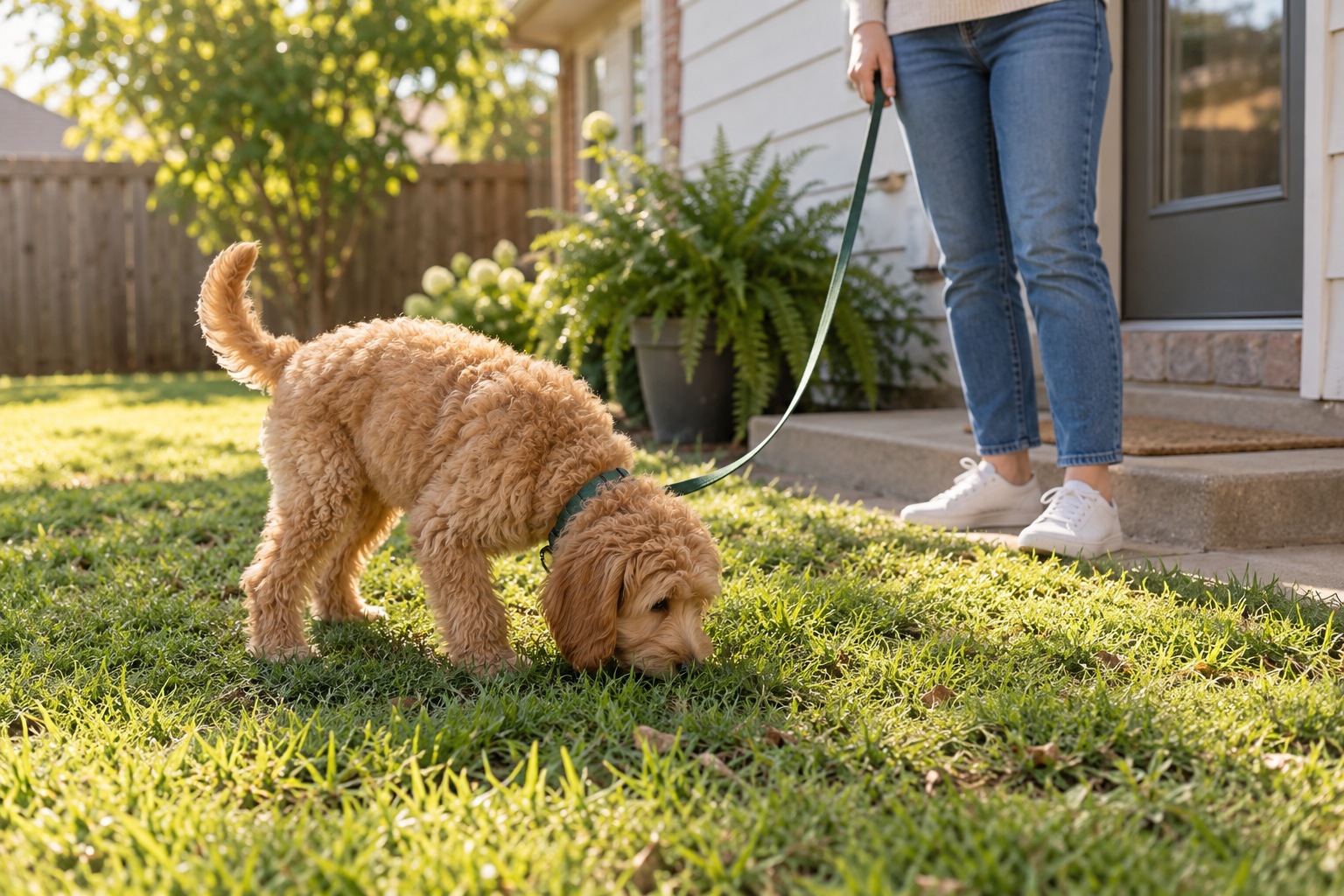
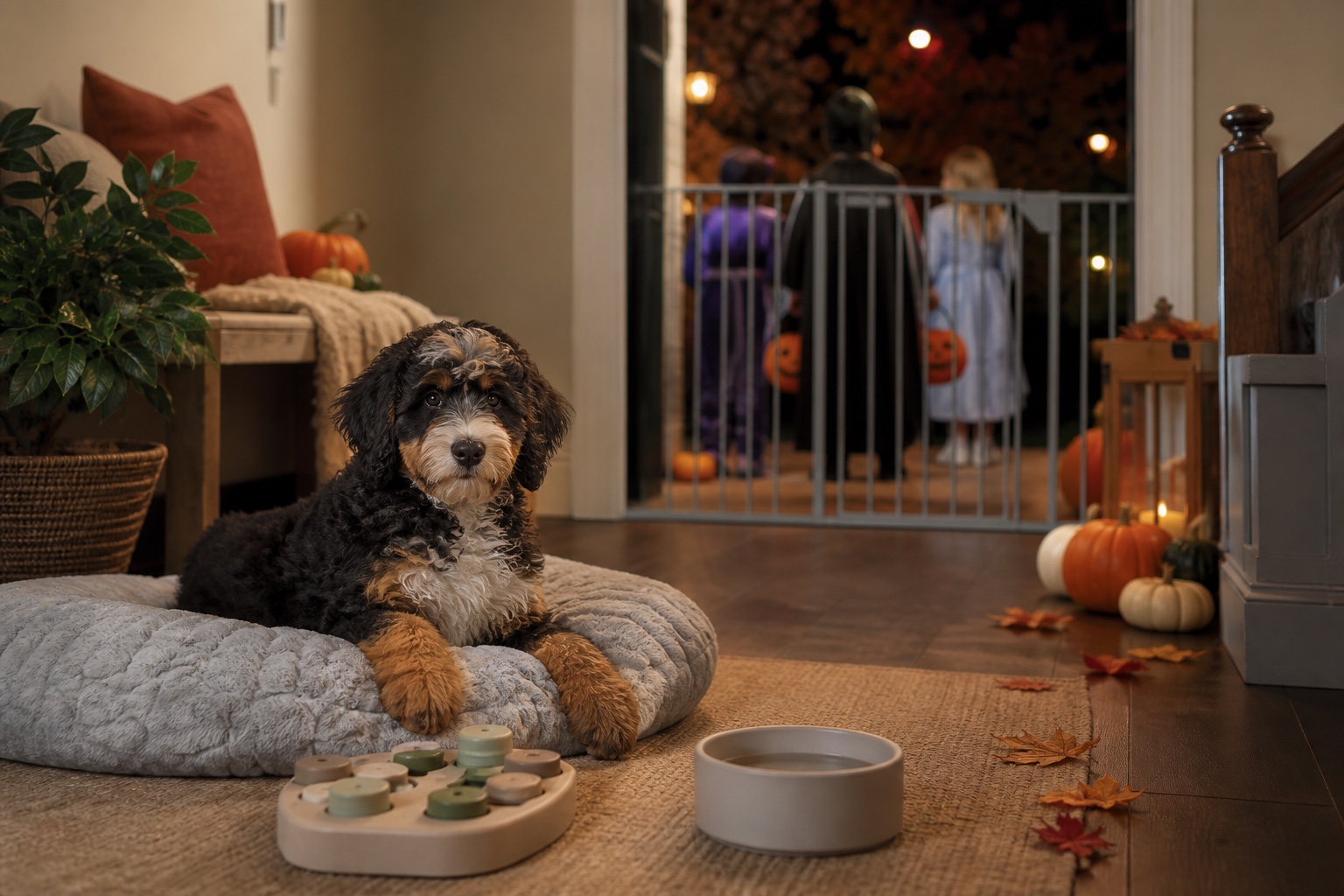
Bernedoodle temperament is one of the most important things to consider before bringing a puppy home. The puppy in the photo may be irresistible, but your family will live with that dog’s daily habits, activity needs, and personality long after puppyhood.
Are Bernedoodles good family dogs? They can be wonderful companions for families prepared to provide training, supervision, exercise, and time together. Still, no breed mix guarantees a particular personality. The most useful question is whether an individual puppy’s needs fit the life your family can offer.
At Red Barn Doodles & More near El Reno, Oklahoma, we focus on helping families find that fit. Here is a practical way to think about life with a Bernedoodle as your puppy grows.
What shapes a Bernedoodle’s personality?
Bernedoodles have Bernese Mountain Dog and Poodle ancestry. The AKC (American Kennel Club) describes Bernese Mountain Dogs as affectionate family companions and Poodles as active, intelligent dogs. Those backgrounds offer context, but they do not provide a recipe for an individual puppy.
One puppy may approach a new person immediately. Another may prefer to watch before joining in. A dog can enjoy cuddling and still need daily activities that involve thinking, sniffing, and movement.
Genetics are part of the picture, alongside development, learning, and environment. A large 2022 study of canine genetics and behavior found that breed alone was a limited predictor of an individual dog’s behavior. That supports looking beyond a breed label when choosing a companion.
Ask for observations: What does this puppy do when something unfamiliar appears? How does the puppy interact with littermates? What happens after an exciting play session? Examples tell you more than a single label such as “sweet” or “calm.”
Puppyhood: affection comes with a learning curve
Your puppy is arriving in a household with unfamiliar sounds, people, and expectations. Instead of expecting polished manners immediately, decide which everyday routines matter most.
For a household with children, that might mean eating breakfast without a puppy grabbing pajama hems. For another family, it might mean learning to rest nearby during a work call. Break those goals into small, teachable pieces.
Choose a few shared rules before pickup:
- Where will the puppy sleep and rest during the day?
- Who will handle bathroom trips during work and school hours?
- What will everyone do when the puppy jumps or grabs clothing?
- Which spaces will be available only with adult supervision?
Use rewards to teach the behavior you want. The American Veterinary Society of Animal Behavior recommends reward-based training. A family can make that practical by keeping the same cues and expectations across caregivers.
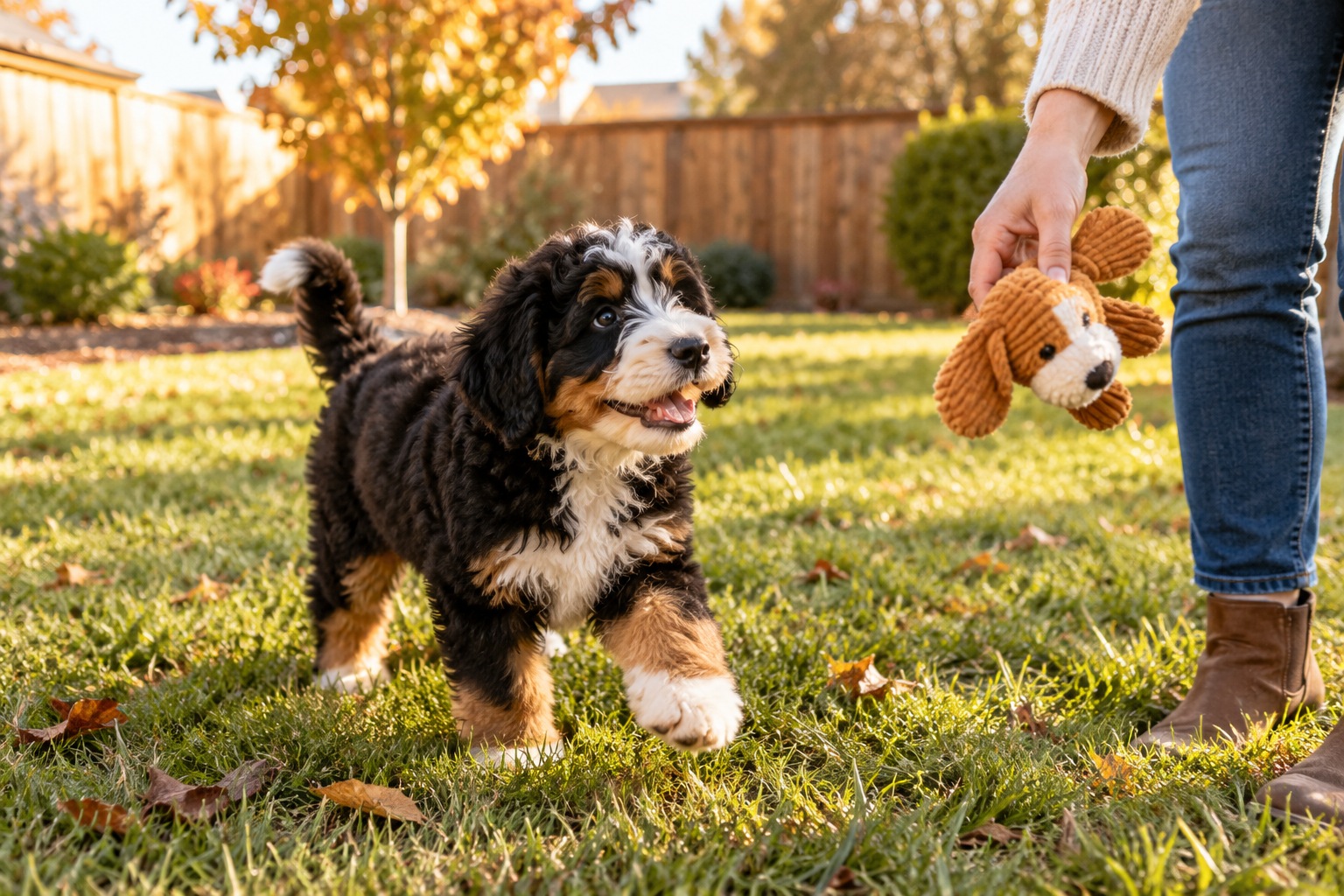
Adolescence: keep your expectations flexible
As your Bernedoodle grows, keep assessing the dog in front of you. If a greeting or walking routine becomes harder, simplify the situation and practice where success is easier. Avoid treating one difficult afternoon as a permanent verdict on your dog’s personality.
For example, if the front doorway is too exciting, have a family member practice entering quietly while another adult manages the dog at a comfortable distance. Work on a manageable version of the task before adding a whole group of visitors.
Keep a short record of what you notice. Does difficulty appear around guests, after a busy day, or only in a new place? Bring those details to a qualified trainer or your veterinarian when you need help. A sudden behavior change deserves veterinary attention rather than an assumption that the dog is simply being stubborn.
What Bernedoodle energy level should families plan for?
Plan to make daily room for activity, training, and rest. Poodle ancestry is a reason to ask thoughtful questions about energy; a smaller size is not a promise of a quieter lifestyle.
Think through an ordinary Tuesday. Who has time for an outdoor outing? Can someone provide a short training session between commitments? Where can the dog rest when the house gets busy? Ask your veterinarian about appropriate activity as your puppy grows.
A useful family plan includes several kinds of time together: a chance to explore, a chance to learn, and a chance to settle. Ask the breeder what they have observed about the puppy’s activity and recovery after play, while remembering that behavior can change in a new home.
Living with a Bernedoodle with kids
Even an affectionate dog needs adults to manage interactions. The AKC (American Kennel Club) specifically recommends supervision around children for Bernese Mountain Dogs, and that is a sensible expectation for families considering a Bernedoodle too.
Build a household rule that the puppy’s resting space is private. Give children age-appropriate ways to participate, such as helping an adult prepare a food toy or practicing a familiar cue. Put an adult in charge of deciding when an interaction should end.
When considering a puppy, describe your household honestly. Include children’s ages, visiting grandchildren, other pets, noise levels, and the amount of help available. Those details are more useful for matching than saying that you want a “family dog.”
How Our Program Helps
At Red Barn Doodles and More near El Reno, Oklahoma, we value thoughtful family matching and transparent conversations before a puppy comes home. Our About page describes our family setting and early socialization. You can also meet our Parents and ask questions about an individual puppy.
When considering any breeding program, ask how puppies are raised, what information families receive, and what support is available after pickup. Tell us where you would like guidance so we can discuss your questions. Planning ahead gives your family a clearer starting point for the transition.
Frequently Asked Questions
Are Bernedoodles good family dogs?
A Bernedoodle can be a good family companion when the individual dog fits the household and adults provide daily care, training, and supervision. Discuss your children, schedule, other pets, and expectations with the breeder before choosing a puppy.
Will my Bernedoodle have the same personality as the parents?
The parents provide useful background, but they cannot guarantee a puppy’s adult personality. Ask about the parents and the individual puppy, including how the puppy approaches people, handles unfamiliar situations, and settles after activity.
What Bernedoodle energy level should we expect?
Plan for daily activity and opportunities to learn, along with quiet rest. Energy varies between dogs. Describe your ordinary weekday to the breeder and ask your veterinarian about appropriate activity for your puppy as the puppy grows.
How should we introduce a Bernedoodle to our children?
Arrange a short, calm introduction with an adult actively supervising. Give the puppy room to move away and show children where the puppy can rest undisturbed. Adults should manage interactions and decide when a break is needed.
Does Bernedoodle behavior change with age?
Your routines and expectations will need to adjust as your puppy grows. Keep observing the individual dog and practice manageable versions of everyday skills. Ask a qualified reward-based trainer for help with persistent concerns and a veterinarian about sudden changes.