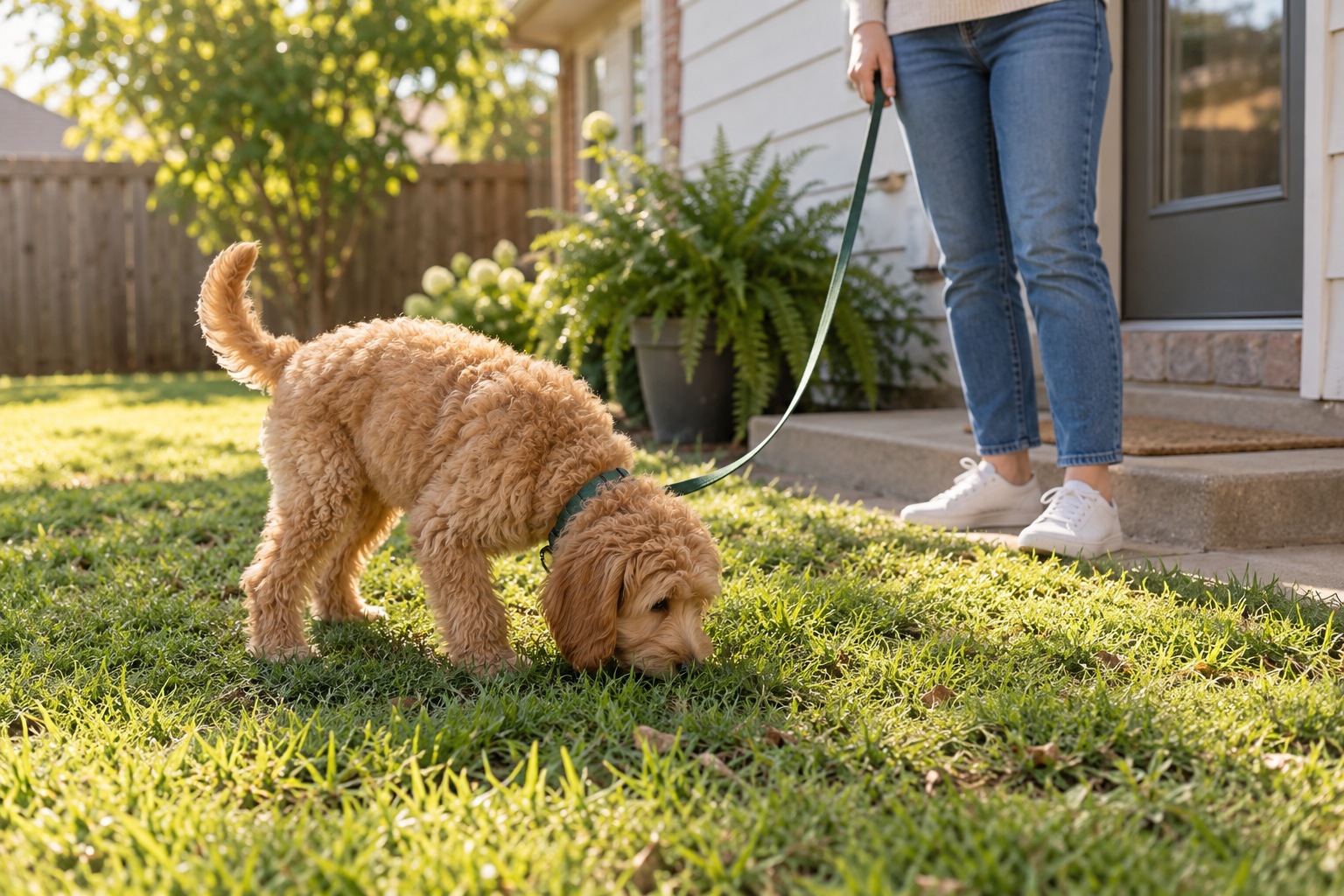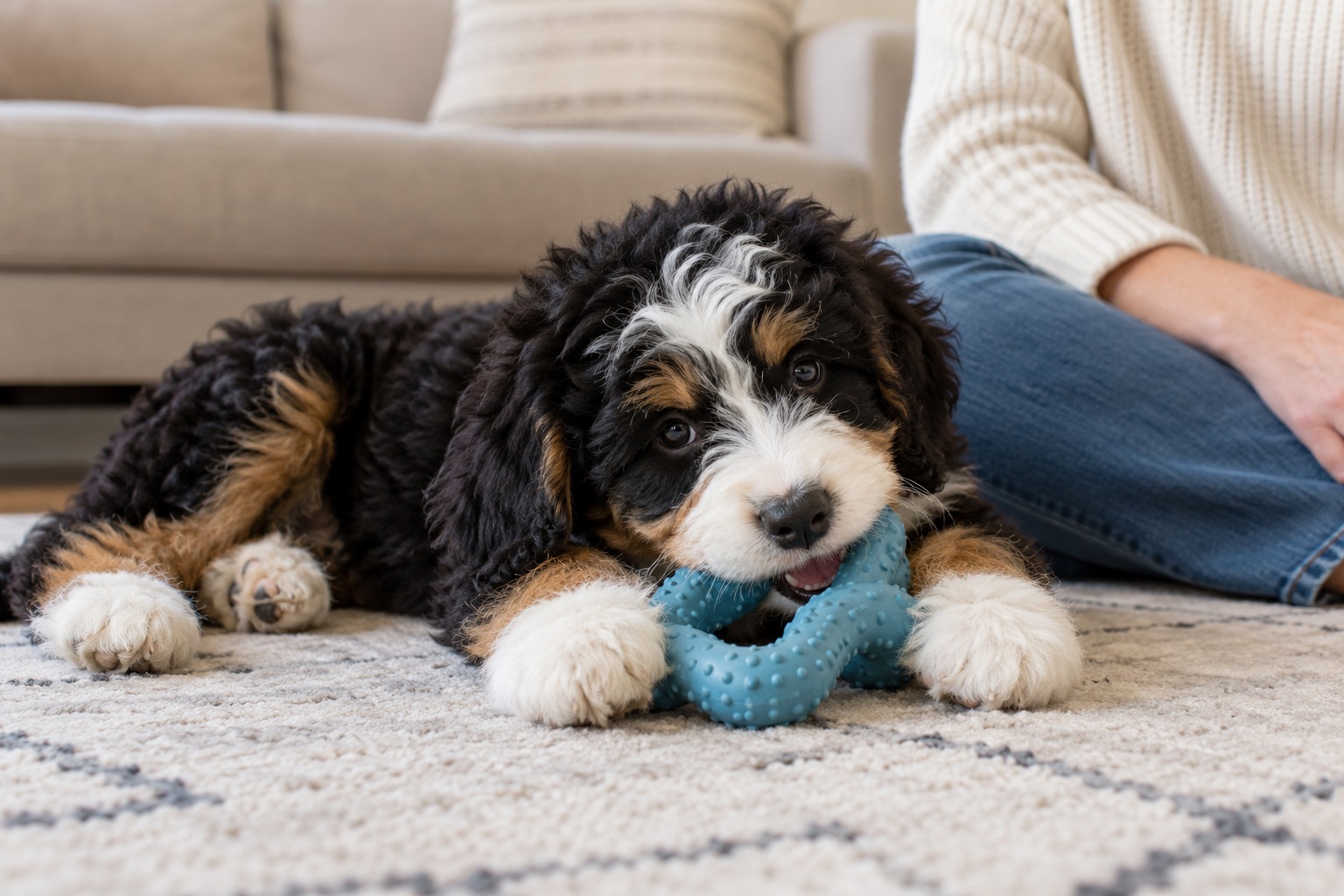
Puppy teething and biting can make an otherwise sweet afternoon feel exhausting. One moment your doodle is playing with a toy; the next, those sharp little teeth are attached to your sleeve.
Mouthing and chewing are common parts of puppy development. That does not mean your family has to accept painful play or wait for every behavior to disappear on its own. A useful plan gives your puppy appropriate things to chew, makes your response predictable, and provides breaks before everyone becomes frustrated.
Understand the puppy teething timeline
Puppies first develop baby teeth and later replace them with permanent teeth during their early months. The sequence matters more than a precise calendar date. Ask your veterinarian to check dental development and recommend an appropriate care routine for your puppy.
Avoid comparing one puppy’s mouth with another’s or assuming that every change is teething. If you are concerned about discomfort, bleeding, eating, or a retained tooth, contact your veterinarian.
Chewing can continue after adult teeth arrive. Replacing baby teeth and learning how to play with people are separate processes, so keep teaching gentle interaction as your puppy grows.
Teething is only part of the story
A puppy may mouth during play, exploration, excitement, or fatigue. Before deciding what to do, look at the situation. Does biting begin during a chase game? When children run past? Toward the end of a long, busy evening?
The AKC (American Kennel Club) notes that both teething and overtiredness can contribute to biting. If your puppy has had plenty of activity and is becoming increasingly frantic, consider whether a quieter setting and rest would be more helpful than another game.
Try keeping a brief note for a few days: when biting starts, what came before it, and what helped. That record can reveal a manageable pattern and give a trainer useful information if you need support.
How to stop puppy biting during play
The goal is to teach what works during interaction with people. Veterinary guidance on handling puppy biting recommends appropriate toys, consistent responses, and ending play when it becomes too rough.
Here is a simple household routine based on those principles:
- Have a toy ready. Begin play with an appropriate toy rather than waving hands near the puppy’s mouth.
- Offer the toy before grabbing starts. Make it easy for your puppy to choose something suitable.
- Pause when teeth touch skin or clothing. Calmly stop the interaction. If necessary, step behind a gate so everyone has space.
- Restart quietly when the puppy is ready. Keep the next attempt easier and shorter.
- Change the situation if biting returns. Check for a bathroom need, overstimulation, or a need to rest.
Make the response consistent across adults and children. If one person encourages hand wrestling while another tries to discourage it, the puppy receives mixed information.

Choose safe chew toys for puppies
No chew toy is safe for every dog in every situation. Choose an item appropriate for your puppy’s size and chewing style, supervise its use, and remove it if pieces start coming off.
Veterinary guidance on puppy teething toys recommends avoiding extremely hard items such as bones and antlers and discussing chew choices with your veterinarian. Toys with some flexibility are a better starting point, but your veterinarian can help you choose for your individual puppy.
Create a small rotation of suitable options rather than assuming the newest purchase will solve everything. Check each item before offering it. A toy that worked last week may need replacing after your puppy damages it or grows larger.
If you want to cool a teething item, follow the manufacturer’s directions and ask your veterinarian what is appropriate. Do not assume that a household object, human teething product, or edible chew is safe simply because it is marketed as soothing.
Help children participate safely
An adult should manage interactions between children and a mouthy puppy. Give children a clear plan they can remember: stop the game, get an adult, and let the adult create space. Do not make a young child responsible for correcting or restraining an excited puppy.
Before an after-school play session, an adult can set out a toy and choose a short activity. End while the interaction is still comfortable. If the puppy repeatedly grabs clothing, use a gate and choose a calmer setup for the next attempt.
This is also a useful moment to agree on family rules. Put the same suitable toys within adults’ reach, decide who handles breaks, and keep the puppy’s resting area available when household activity increases.
When biting needs professional help
Seek help if biting causes injuries, escalates, occurs around food or handling, or makes someone afraid to interact with the puppy. The AKC advises consulting a veterinarian or professional trainer for biting outside normal play situations. Avoid forcing an interaction to test whether the behavior will happen again.
Ask your veterinarian about dental pain or a sudden behavior change. For doodle puppy training support, look for a qualified professional who uses reward-based methods. The American Veterinary Society of Animal Behavior’s humane training guidance supports this approach rather than physical punishment.
How Our Program Helps
At Red Barn Doodles and More near El Reno, Oklahoma, we value thoughtful family matching and transparent conversations before a puppy comes home. Our About page describes our family setting and early socialization. You can also meet our Parents and ask questions about an individual puppy.
When considering any breeding program, ask how puppies are raised, what information families receive, and what support is available after pickup. Tell us where you would like guidance so we can discuss your questions. Planning ahead gives your family a clearer starting point for the transition.
Frequently Asked Questions
When does puppy teething happen?
Puppies first have baby teeth and later replace them with adult teeth during their early months. Timing varies. Ask your veterinarian to check dental development and advise you about your puppy’s individual needs rather than relying on a rigid timeline.
How do I stop puppy biting during play?
Begin with an appropriate toy, keep sessions manageable, and calmly pause when teeth touch skin or clothing. Give everyone space if needed. Use the same response across caregivers and seek professional help if the behavior causes injury or concern.
What are safe chew toys for puppies?
Choose toys appropriate for your puppy’s size and chewing habits, supervise use, and remove damaged items. Ask your veterinarian for suitable options. No toy is safe for every puppy, and product labels alone cannot replace supervision.
Can an overtired puppy become more mouthy?
Overtiredness can contribute to biting. Consider what happened before the behavior began. If a busy session is becoming frantic, offer a bathroom opportunity and a calm resting space rather than automatically adding more activity.
When should I get help for puppy biting?
Contact your veterinarian or a qualified reward-based trainer if biting escalates, causes injury, appears around food or handling, or makes someone afraid. Do not force another interaction to test the puppy. Ask your veterinarian about suspected pain or sudden changes.