The first school morning after a relaxed summer can feel like a major event. Alarm clocks ring earlier, children move quickly, and the house suddenly becomes quiet. Your doodle puppy notices every part of that change.
A schedule shift does not automatically create puppy separation anxiety. Still, a puppy who has enjoyed near-constant company may need help learning that alone time is safe, temporary, and part of an ordinary day. The goal is not to make your puppy independent overnight. It is to build a predictable rhythm in small, comfortable steps.
This guide gives Oklahoma families a practical back-to-school dog routine that works for busy mornings, changing extracurricular schedules, and first-time puppy owners.
Why a Changing Family Schedule Can Feel So Big
Puppies learn through patterns. They begin to recognize when meals arrive, when the back door opens, who starts playtime, and what happens before everyone leaves. When those signals change at once, a puppy may become more alert or unsettled.
You may see extra following, vocalizing, pacing, difficulty settling, or excitement when someone picks up keys or a backpack. Those behaviors do not tell you exactly why the puppy is worried, but they are useful information. Slow the transition down and make the next part of the day easier to predict.
Start the New Puppy Schedule Before School Begins
If possible, begin adjusting your doodle puppy routine about a week before the first busy day. Move wake-up, meals, potty trips, play, naps, and bedtime toward the new times in small increments.
- Set the alarm a little earlier and begin the morning routine calmly.
- Offer breakfast and a potty trip at the time you will use on school days.
- Practice short quiet periods while family members work in another room.
- Schedule an age-appropriate play or training session before the house gets busy.
- Keep bedtime consistent so an overtired puppy is not starting the day already frazzled.
Consistency matters more than perfection. A simple puppy schedule repeated most days is easier to understand than a complicated plan that changes constantly.
Build a Calm Morning Routine
Meet Basic Needs First
Give your puppy enough time for a potty break, breakfast, water, and a little connection before the rush begins. A short sniff walk, a few easy cues, or gentle play can help take the edge off without turning the morning into a marathon.
Create a Predictable Resting Place
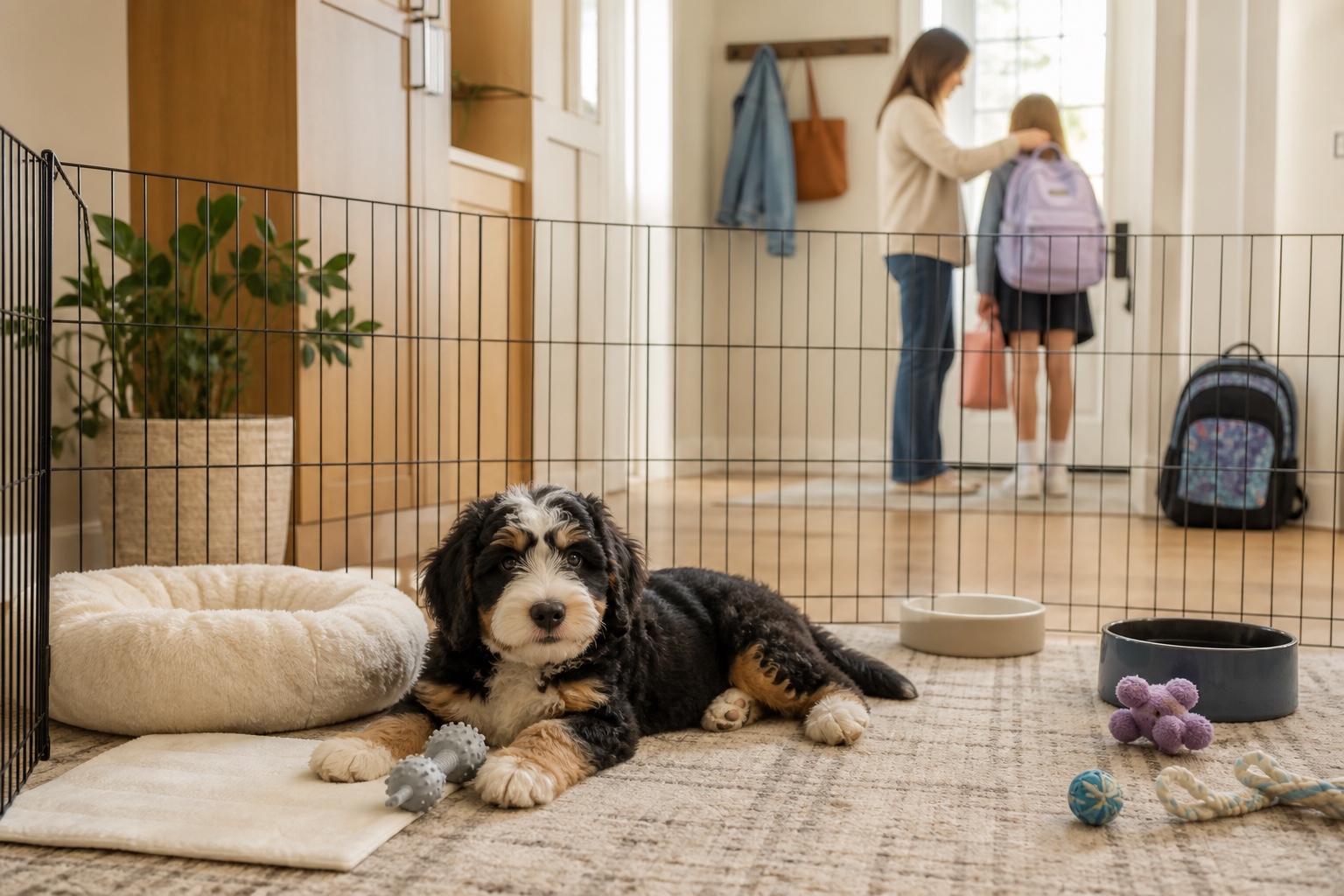
Choose a safe area with a bed or mat, water when appropriate, and one or two puppy-safe enrichment items. This might be a crate your puppy already enjoys, an exercise pen, or a gated room. The setup should be familiar before you depend on it for a longer absence.
Make Departures Boring
Long, emotional goodbyes can make the doorway feel unusually important. Instead, gather backpacks and shoes before placing your puppy in the safe area. Offer the planned activity, say a simple phrase, and leave without repeated returns.
Practice Leaving a Puppy Home Alone in Small Steps
Do not wait for the first full school day to test alone time. Practice while your puppy is comfortable and the household has time to observe the response.
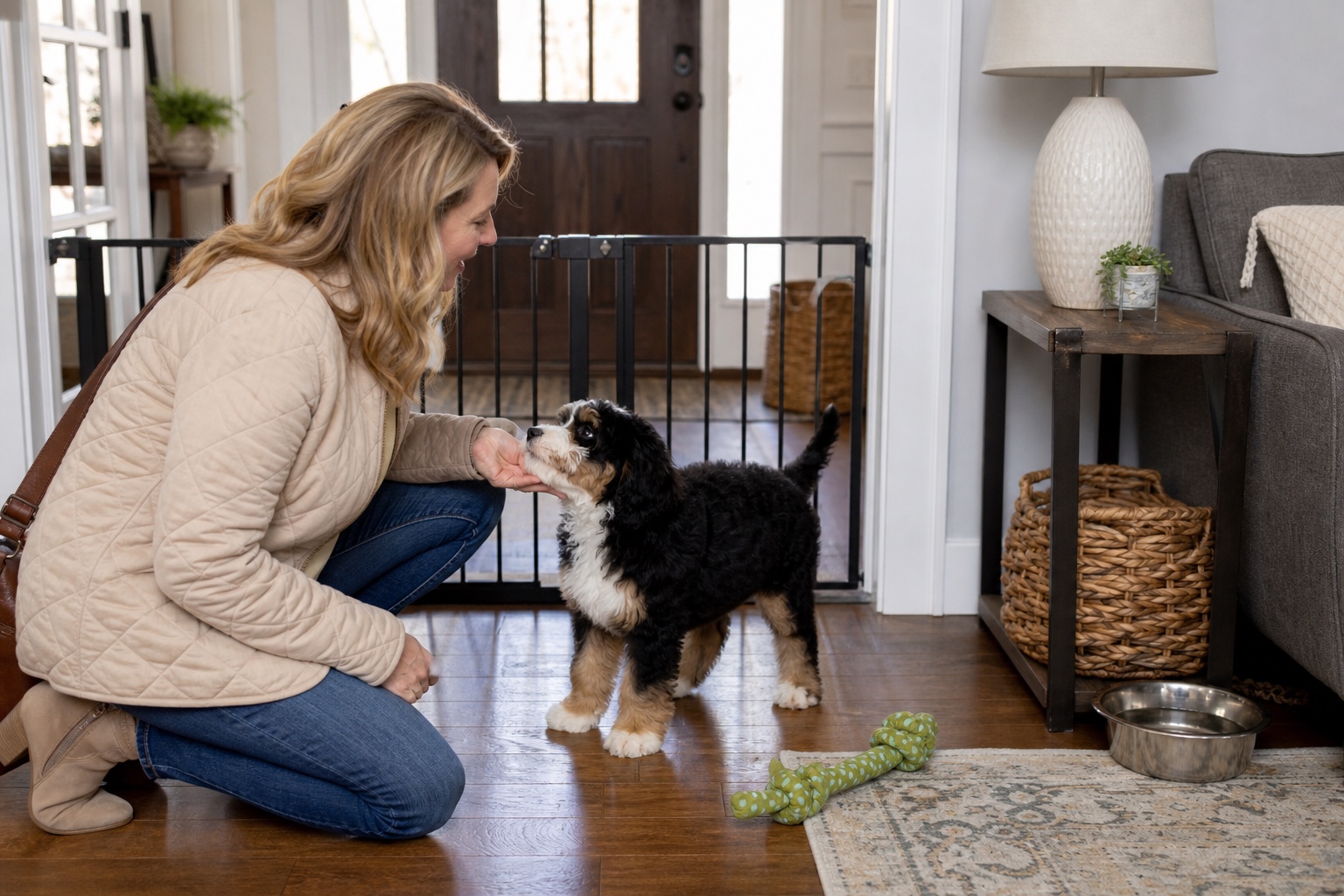
- Begin with a closed gate or door for a few seconds while you remain nearby.
- Return while the puppy is reasonably calm, then repeat at an easy level.
- Add ordinary departure cues such as shoes, keys, or a backpack one at a time.
- Step outside briefly and increase duration gradually instead of making a sudden leap.
- Use a camera if helpful, but look for overall settling rather than watching every movement.
If your puppy cannot settle at a particular step, shorten the time or make the setup easier. Progress is rarely perfectly linear. A young puppy also needs frequent potty and care breaks, so arrange a trusted adult or professional visit when the school-day gap is longer than your puppy can comfortably manage.
Use Enrichment Without Creating More Excitement
A food puzzle, stuffed rubber toy, safe chew, or scatter of kibble can give a puppy an appropriate activity as the family leaves. Choose items that fit your puppy’s age, chewing style, and current skill level, and supervise new items before leaving them with your puppy.
Rotate a few familiar choices rather than introducing something completely new every morning. The enrichment is not meant to distract a puppy from serious distress. It is one piece of a routine that already feels manageable.
Plan the Return Home
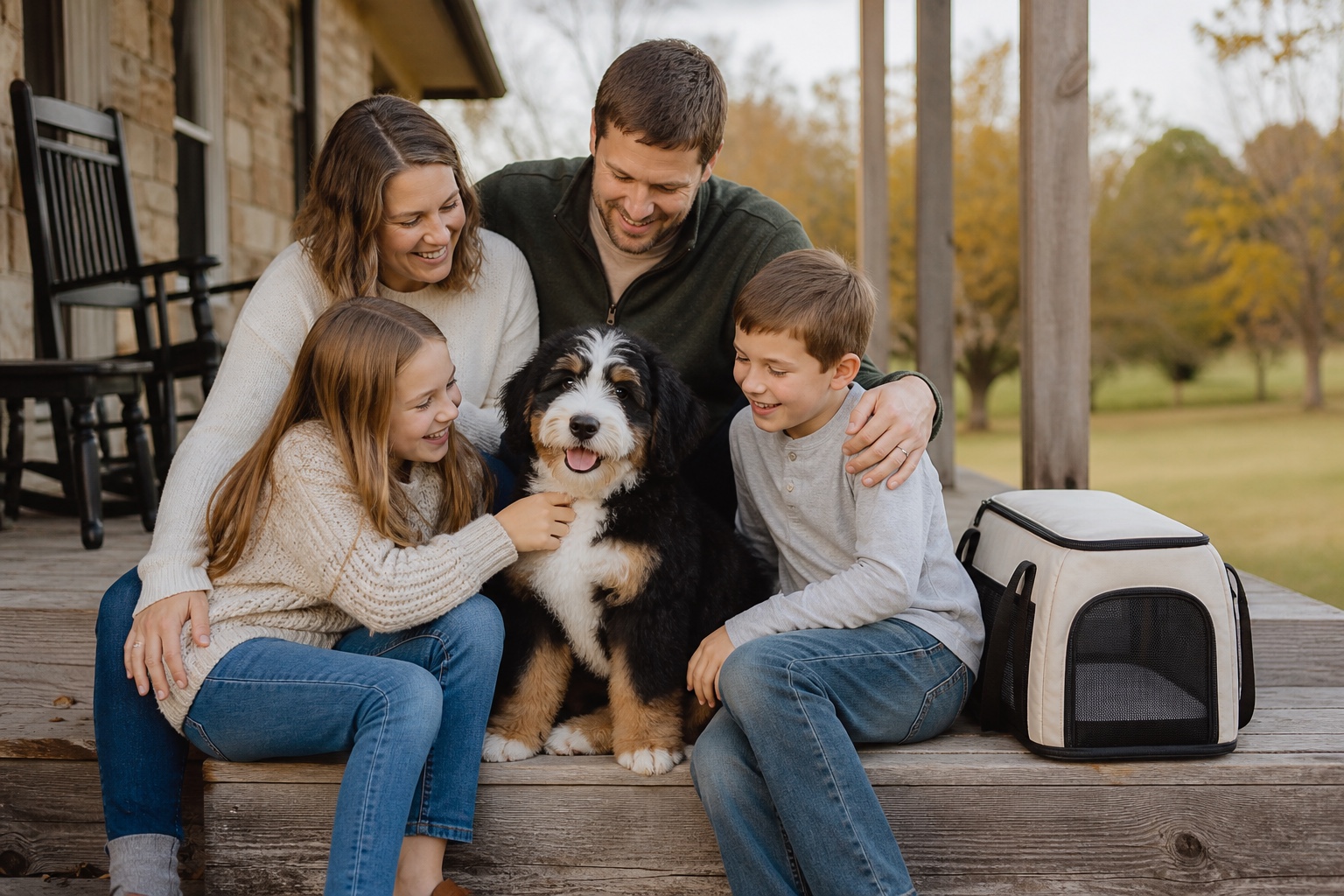
Children may want to rush in and create a celebration. A calmer homecoming often works better. Put belongings down, take the puppy outside, and greet once everyone has a little more space. Then offer movement, training, or play that matches the puppy’s age and energy.
A family calendar can prevent mixed signals. Write down who handles the morning potty trip, midday visit, feeding, walk, training, and bedtime. First-time owners often find that shared responsibility is easier when each job has a name beside it.
When to Ask for Extra Help
Contact a qualified reward-based trainer or your veterinarian if your puppy shows intense or worsening distress, repeatedly tries to escape, cannot eat when alone, or has a sudden behavior change. General routine tips cannot diagnose a problem, and early personalized guidance may keep a difficult pattern from becoming more established.
How Our Program Helps
At Red Barn Doodles and More, families deserve clear information before and after choosing a puppy. Our program emphasizes thoughtful breeding decisions, transparency about parents and puppies, family-oriented early experiences, and practical support for the transition home. We encourage families to ask honest questions about temperament, schedule, grooming, training, and everyday fit.
You can learn more about the dogs behind our puppies on the Parents page, read more About our approach, or Contact us when you are planning a routine.
Frequently Asked Questions
How early should I start a back-to-school routine with my puppy?
Start several days to a week before the household schedule changes when possible. Shift key times gradually and practice short, successful absences.
Can a doodle puppy stay home alone for a full school day?
Many young puppies need more frequent potty, feeding, movement, and social breaks than a full school day allows. Plan dependable midday care based on your puppy’s age and individual needs.
Should I leave the television on for my puppy?
Some families use low, familiar background sound, but it is not a substitute for gradual alone-time practice. Test it while you are home and keep the volume comfortable.
What if my puppy cries when I leave?
Brief vocalizing can have several causes. Shorten the practice, check that basic needs are met, and avoid making sudden duration jumps. Seek qualified help if the response is intense or persistent.
How do I prevent separation anxiety in puppies?
No routine can guarantee prevention, but predictable care, gradual absences, comfortable rest skills, appropriate enrichment, and professional guidance when needed can support healthy adjustment.