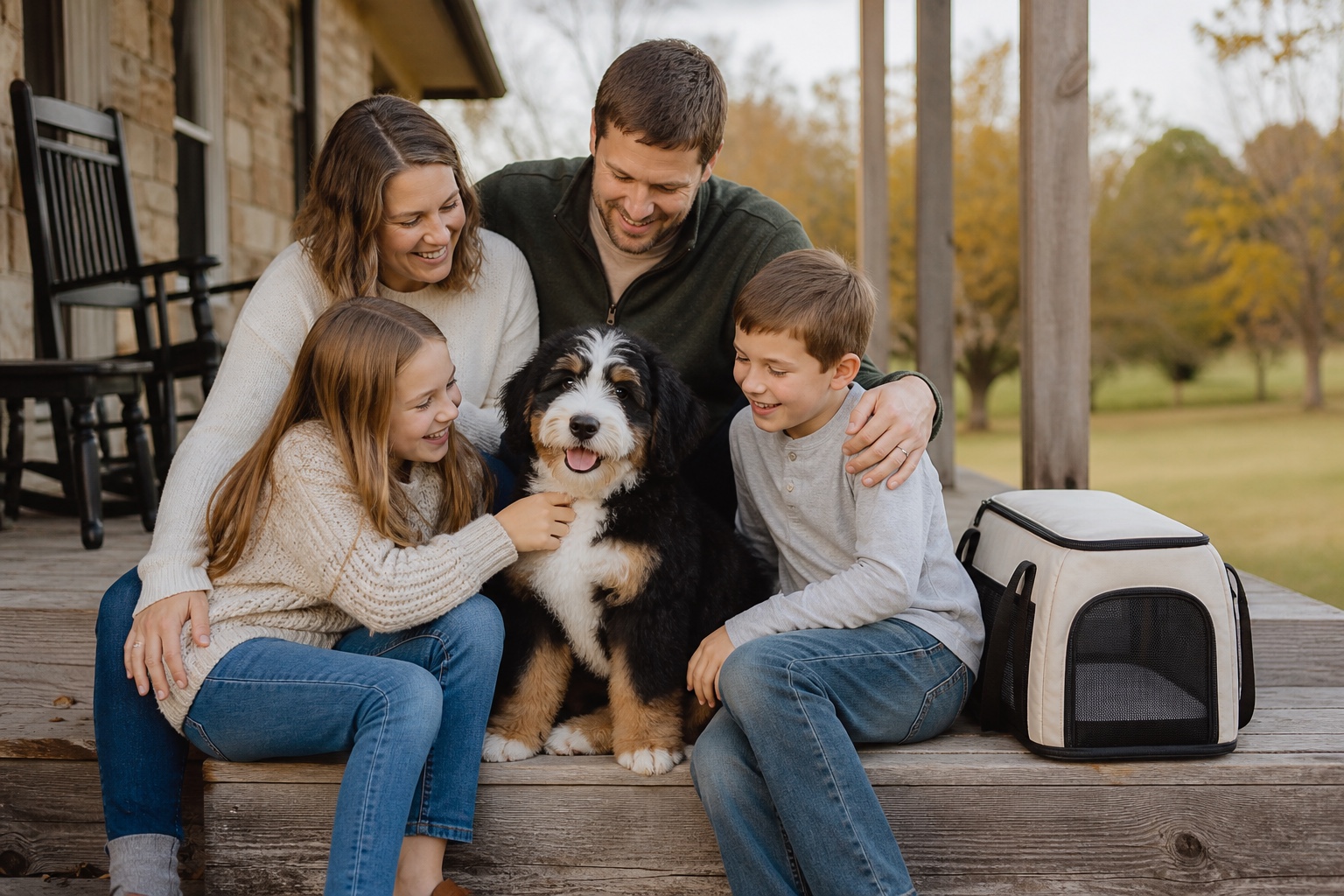
How much exercise does a Bernedoodle need? Most families want a simple number, but the better answer starts with the individual dog. Age, size, health, weather, temperament, and daily routine all influence what enough looks like.
Bernedoodles often enjoy movement and family activities, yet they also need mental work and real rest. More exercise is not always better. The goal is a dog who can move comfortably, think clearly, and settle afterward.
Why Bernedoodle Exercise Needs Vary
A Bernedoodle combines Poodle and Bernese Mountain Dog lines, but puppies can inherit different blends of energy, confidence, focus, size, and coat. One may love long neighborhood walks as an adult; another may prefer shorter outings mixed with training and sniffing.
Ask about the parents and the specific puppy rather than relying on a breed label. Bernedoodle temperament is individual, and a thoughtful breeder should help families consider activity level alongside size and appearance.
Bernedoodle Puppy Exercise: Build the Body Gradually
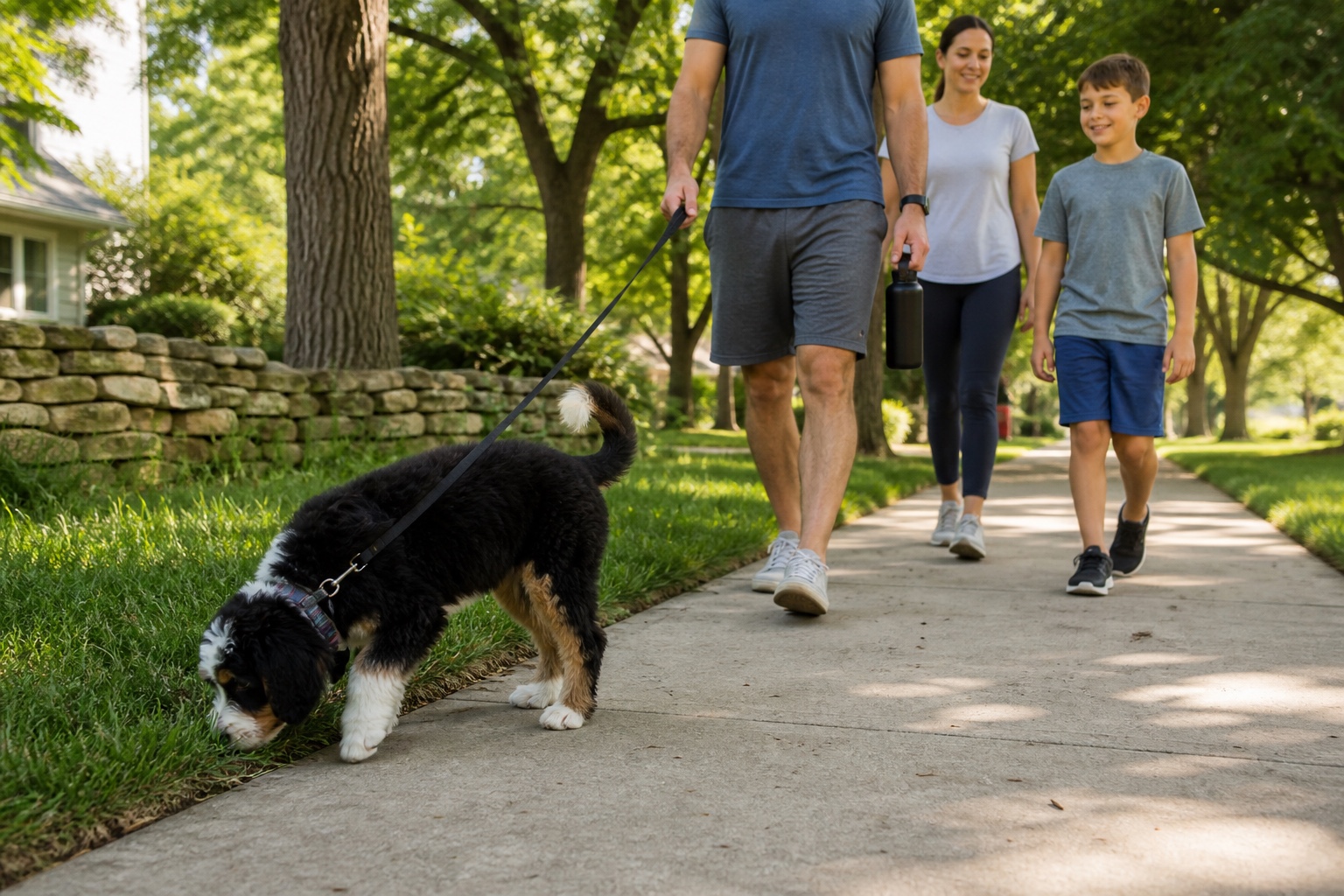
Young puppies benefit from several short periods of movement and exploration throughout the day. Free play on safe surfaces, gentle training, sniffing, and brief leash practice are usually more appropriate than repetitive distance.
- Let the puppy set much of the pace during supervised play.
- Choose safe footing and avoid repeated high-impact jumping.
- Keep structured walks short enough that the puppy finishes comfortably.
- Alternate activity with naps in a quiet, familiar space.
- Ask your veterinarian about exercise for your puppy’s age, growth, and health.
Popular minute-per-month formulas are rough internet shortcuts, not individualized medical advice. Watch your puppy and work with your veterinarian instead of treating a formula as a target to hit.
Adolescent Bernedoodles Need Structure, Not Endless Miles
Adolescent dogs may appear to have unlimited energy, but simply adding more running can create a fitter dog who still has not learned to settle. Mix physical activity with short training sessions, scent games, calm chewing, and scheduled rest.
This is also a useful stage for practicing loose-leash walking, waiting at doors, coming when called in safe settings, and disengaging from distractions. Mental effort can be tiring without adding repeated impact.
Adult Bernedoodle Exercise Can Be Flexible
A healthy adult may enjoy daily walks, play, training, and weekend adventures. Some need a more active plan; others are satisfied with moderate outings and plenty of family time. Consistency usually works better than a quiet week followed by one exhausting weekend.
Create a Balanced Activity Menu
- Sniff walks that allow the dog to investigate safely
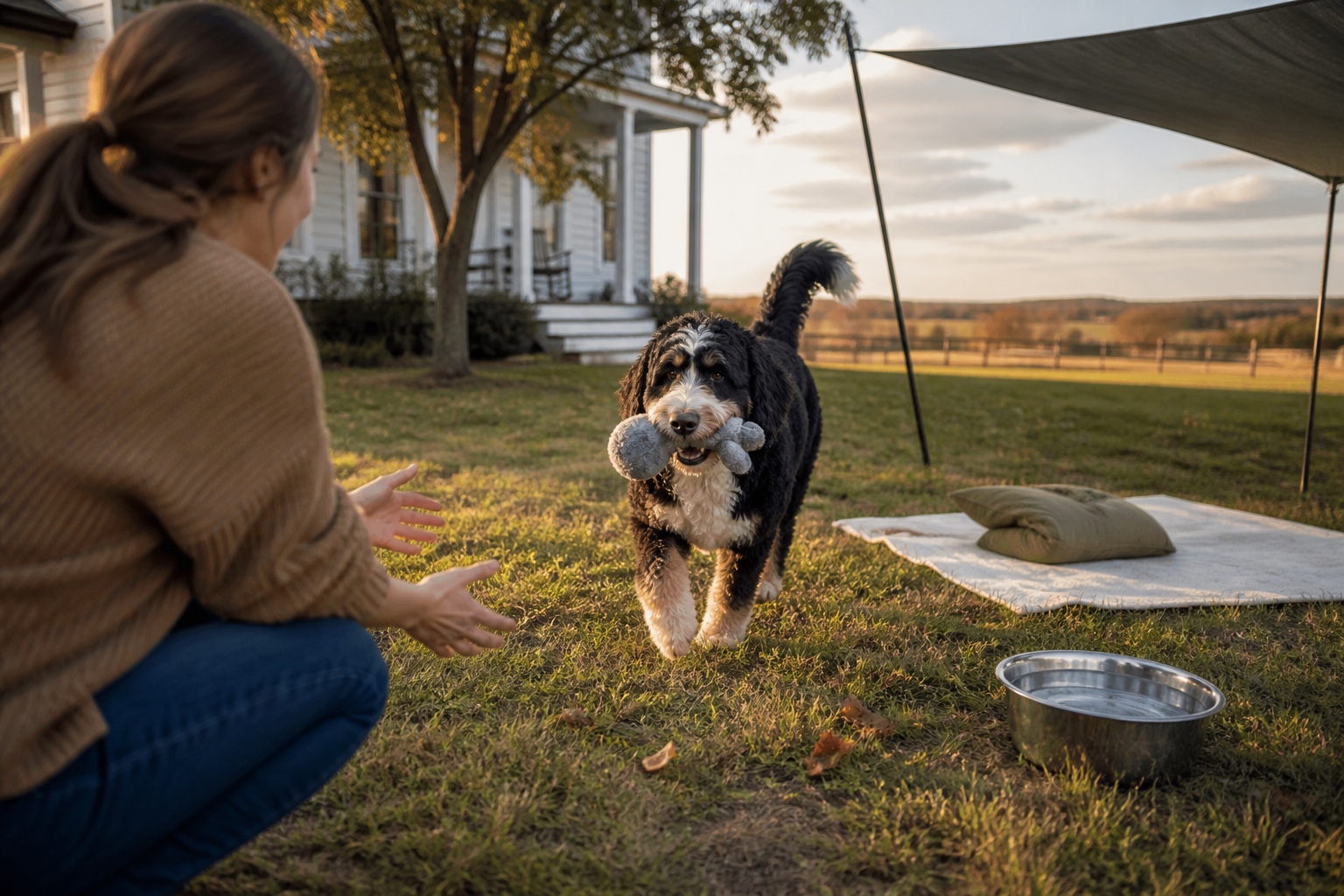
- Fetch or tug with clear starts, stops, and breaks
- Short reward-based training sessions
- Food puzzles and simple scent searches
- Supervised play with compatible dogs
- Quiet companionship and sleep after activity
Think in Short Activity Blocks
Instead of searching for one perfect daily total, build a few purposeful blocks. A puppy’s day might include a brief sniff outside, two minutes of name practice, supervised play, and a nap. An adult’s day might include a morning walk, a short lunchtime search game, and evening training or fetch. Adjust the plan after travel, grooming, daycare, visitors, or poor sleep. This block approach makes it easier to notice which activities help your dog settle and which leave the dog overstimulated.
Walking a Bernedoodle in Oklahoma Weather
Oklahoma conditions can change quickly. In warm weather, choose cooler times, carry water, use shade, and check the walking surface. In storms, high wind, or extreme temperatures, move training and enrichment indoors.
A shorter safe outing is better than forcing a plan because the calendar says it is walk time. Puppies, seniors, dogs with dense coats, and dogs with health concerns may need special adjustments from a veterinarian.
How to Tell Whether the Routine Is Working
Look at the whole day. A well-matched routine often supports normal appetite, comfortable movement, interest in activities, and the ability to settle. Restlessness can come from too little activity, but it can also come from overstimulation, missed sleep, unclear training, discomfort, or stress.
Reduce intensity and seek professional guidance if you notice limping, repeated stiffness, reluctance to move, unusual breathing, collapse, or a sudden change in stamina. Those signs are not training problems to push through.
Rest and Recovery Are Part of the Plan
Puppies and active adults need uninterrupted sleep after stimulating days. Provide a quiet place where children and other pets will not keep restarting play. On the day after a long outing, choose an easier sniff walk or gentle training instead of repeating the same intensity. Rest does not mean the routine failed; it is part of a sustainable exercise plan. If your dog seems unusually sore, tired, or reluctant to participate, pause and ask your veterinarian for guidance.
Exercise Is Also a Family-Fit Question
Before choosing a puppy, picture an ordinary Tuesday. Who handles the morning outing? What happens during school and work? Is someone available for training and grooming? Can the family provide appropriate activity in both summer heat and winter weather?
The right match is not the puppy with the most energy or the calmest photo. It is the puppy whose likely needs fit the life your family can sustain.
How Our Program Helps
Red Barn Doodles and More uses transparent conversations about parents, puppies, temperament, size expectations, and everyday care. Our family-oriented program emphasizes thoughtful breeding and support rather than one-size-fits-all promises. We want families to understand the commitment and choose a puppy that can thrive in their home.
Learn more on About, meet the parent dogs on Parents, and use Contact to discuss the activity level you hope to share with a puppy.
Frequently Asked Questions
How active are Bernedoodles?
Many are playful and enjoy regular activity, but energy varies widely. Parent temperament and the individual puppy give more useful context than the breed name alone.
How long should I walk a Bernedoodle puppy?
Keep walks short, comfortable, and focused on exploration. Ask your veterinarian for guidance based on age, size, growth, and health.
Can an adult Bernedoodle be a hiking companion?
Some healthy adults enjoy hiking after gradual conditioning. Discuss terrain, distance, heat, parasites, paws, and health with your veterinarian first.
Is a yard enough exercise for a Bernedoodle?
A yard helps, but most dogs still benefit from shared activity, training, sniffing, and social connection. Being outside alone is not the same as purposeful enrichment.
Why is my Bernedoodle still wild after a long walk?
The dog may be overstimulated, overtired, missing mental work, or still learning to settle. Consider the full routine and ask a qualified trainer if the pattern continues.