Bringing home a puppy is exciting, but most families are not just thinking about the puppy stage. They want to know what life will look like when that puppy grows up.
That is especially true with a full grown mini Bernedoodle. Mini Bernedoodles are popular with families because they often offer a sweet combination of playful, affectionate, and manageable. But like any dog, they are not one-size-fits-all.
Before choosing a puppy, it helps to understand the expected size, adult temperament, energy level, grooming needs, and everyday lifestyle fit.
This guide is designed to help families, especially first-time puppy owners, understand what to realistically expect from a mini Bernedoodle as they grow into adulthood.
What Is a Mini Bernedoodle?
A mini Bernedoodle is typically a cross between a Bernese Mountain Dog and a Miniature Poodle, though exact pairings can vary depending on the breeder and generation.
Many families are drawn to mini Bernedoodles because they often combine:
- The affectionate, family-focused nature of the Bernese Mountain Dog
- The intelligence and trainability of the Poodle
- A smaller size than a standard Bernedoodle
- A soft, wavy or curly coat
- A playful but often people-oriented personality
Every puppy is an individual, so it is important to talk with your breeder about the parents, expected size range, temperament, and daily care needs.
Full-Grown Mini Bernedoodle Size
One of the most common questions families ask is: “How big will my mini Bernedoodle get?”
The answer depends on the parent dogs, genetics, sex of the puppy, and overall build. In general, a full-grown mini Bernedoodle may fall somewhere in the small-to-medium dog range.
Many mini Bernedoodles are often estimated around:
- Weight: roughly 25–50 pounds
- Height: often around 18–22 inches at the shoulder
Some may be smaller or larger depending on the breeding pair. A “mini” does not always mean tiny. For many families, mini Bernedoodles are still sturdy, active dogs that need room to play, walk, and be part of daily family life.
Why Size Can Vary
Mini Bernedoodle size can vary because mixed-breed puppies inherit traits from both sides of the family tree. Even puppies from the same litter may mature at different sizes.
Factors that can influence size include:
- Size of the Bernese Mountain Dog parent
- Size of the Poodle parent
- Generation of the puppy
- Individual genetics
- Nutrition and growth patterns
- Male vs. female differences
A responsible breeder can usually give an estimated size range, but no breeder can guarantee an exact adult weight.
Mini Bernedoodle Adult Temperament
A mini Bernedoodle’s adult temperament is one of the biggest reasons families love this breed mix.
Many mini Bernedoodles are known for being:
- Affectionate
- Loyal
- Playful
- Social
- Intelligent
- Family-oriented
- Gentle when properly trained and socialized
They often enjoy being close to their people and may want to be involved in everyday activities. For families who want a dog that feels like part of the household, this can be a wonderful fit.
Are Mini Bernedoodles Good Family Dogs?
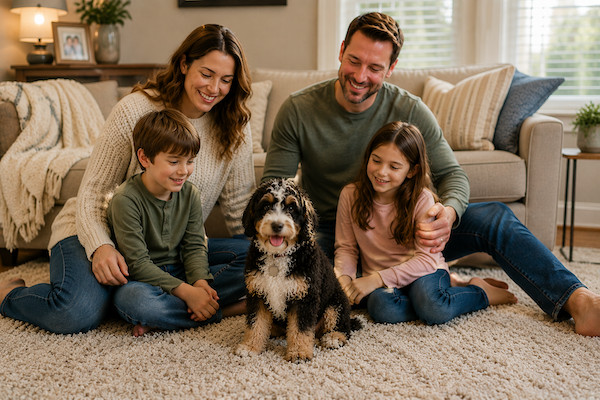
For many homes, yes, a mini Bernedoodle can be a wonderful family dog. They often enjoy children, attention, and playtime. Their size can also feel more manageable than a standard Bernedoodle while still being sturdy enough for active family life.
That said, even the sweetest puppy needs guidance.
Families should be prepared to teach:
- Gentle play
- Crate training
- House training
- Leash manners
- Basic commands
- Calm greetings
- Appropriate chewing habits
Children should also be taught how to interact respectfully with a puppy. Puppies are not stuffed animals. They need rest, structure, and supervision.
Energy Level: What to Expect Day to Day
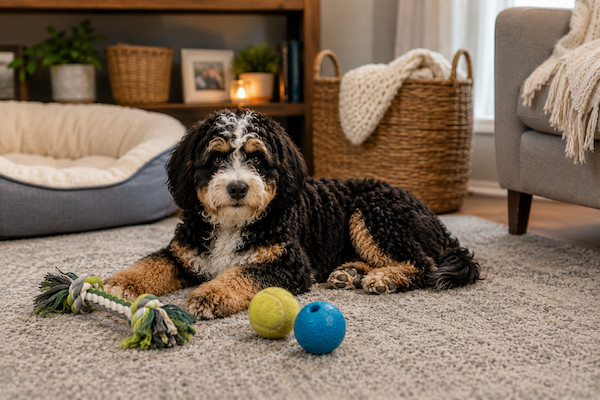
Mini Bernedoodles are often moderately active dogs. They usually enjoy playtime, walks, training games, and family interaction.
A typical adult mini Bernedoodle may enjoy:
- Daily walks
- Backyard play
- Short training sessions
- Puzzle toys
- Fetch or tug
- Family outings
- Relaxing near their people
They are not usually couch ornaments, but many are not nonstop athletes either. They tend to do best with a balance of exercise, mental stimulation, and rest.
Puppy Energy vs. Adult Energy
It is important to remember that puppy energy can feel very different from adult energy.
Young puppies often have short bursts of energy followed by naps. Adolescent dogs may become more curious, excitable, or testing of boundaries. Adults often settle into a more predictable rhythm.
A well-raised mini Bernedoodle still needs activity, but many families find the adult stage easier once training, routines, and manners are in place.
Real-Life Expectations for First-Time Owners
A full-grown mini Bernedoodle can be a great companion, but puppy ownership is still a commitment. Before bringing one home, it helps to think honestly about your lifestyle.
Ask yourself:
- Do we have time for daily training and attention?
- Are we prepared for grooming needs?
- Can we manage puppy chewing, accidents, and early training?
- Do we want a dog that will be involved in family life?
- Are we ready for the cost of food, grooming, supplies, and vet care?
- Do we have a plan for travel or busy workdays?
Mini Bernedoodles often thrive when they are included, trained, and given a steady routine.
Grooming Needs for a Full-Grown Mini Bernedoodle
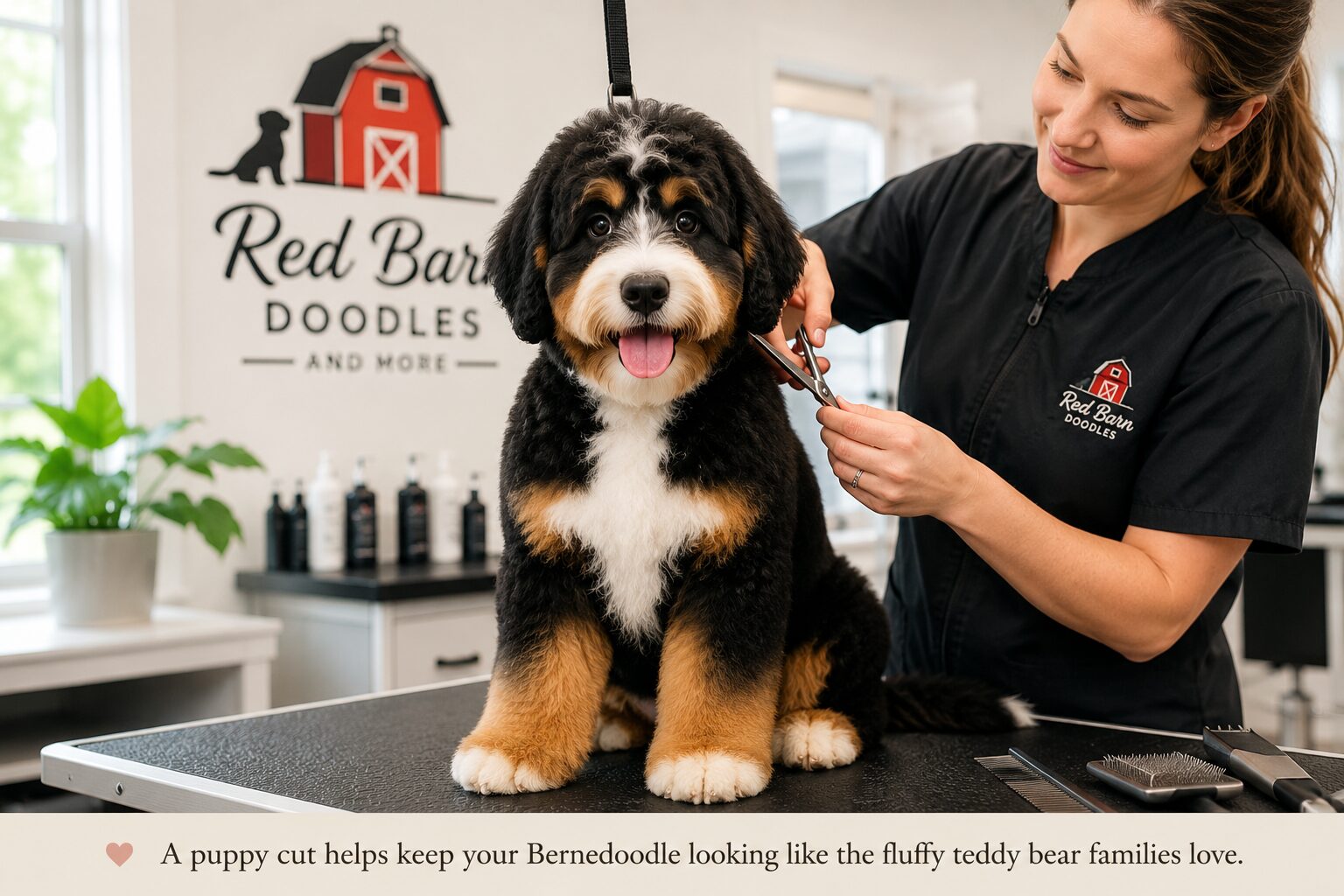
Mini Bernedoodles can have wavy, curly, or mixed coat types. Their coats are often beautiful, but they do require upkeep.
Many families should expect:
- Brushing several times per week
- Regular professional grooming
- Ear and paw checks
- Coat maintenance after outdoor play
- A realistic haircut schedule
A longer coat may require more brushing. A shorter haircut may be easier for busy families to maintain.
If you are unsure what schedule is best, your groomer can help you choose a routine based on your dog’s coat type and your lifestyle.
Training and Socialization
Mini Bernedoodles are often smart and eager to connect with people. That can make training rewarding, but it also means they need consistency.
Helpful early training goals include:
- Name recognition
- Potty training
- Crate comfort
- Sit, down, and come
- Leash walking
- Calm handling
- Meeting new people appropriately
- Learning how to settle
Socialization does not mean overwhelming your puppy. It means helping them experience normal life in a safe, positive way. For vaccine timing, public places, and exposure to other dogs, follow your veterinarian’s guidance.
Thinking about adding a mini Bernedoodle to your family?
You can view current and upcoming puppies here: Puppies for Sale
To learn more about our breeding program and parent dogs, visit: About and Parents
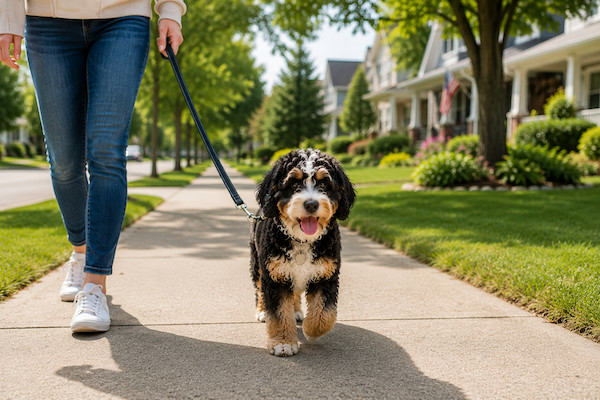
Is a Mini Bernedoodle Right for Your Home?
A mini Bernedoodle may be a good fit if you want a dog that is affectionate, family-oriented, trainable, and involved in daily life.
They may not be the best fit if you want a very low-maintenance dog, are rarely home, or do not want to commit to grooming and training.
The best match is not just about looks. It is about temperament, expectations, and lifestyle.
How Our Program Helps
At Red Barn Doodles and More, we want families to feel prepared, informed, and supported.
Our program emphasizes ethical breeding, transparency, and ongoing guidance. We believe families deserve honest information about size expectations, temperament, coat care, and what daily life with a puppy may look like.
We also know that choosing a puppy is a big decision. That is why we focus on communication, responsible placement, and helping families understand the puppies, the parents, and the program before they commit.
You can learn more here: About
You can meet our parent dogs here: Parents
Final Thoughts
A full-grown mini Bernedoodle can be a wonderful family companion for the right home. They are often affectionate, playful, and people-focused, with a manageable size for many families.
But they still need training, grooming, exercise, and structure.
When families understand the real-life expectations ahead of time, they are better prepared to help their puppy grow into a happy, confident adult dog.
FAQ
How big is a full-grown mini Bernedoodle?
A full-grown mini Bernedoodle is often in the small-to-medium dog range, commonly estimated around 25–50 pounds. Exact size depends on genetics, parent dogs, and individual growth.
Are mini Bernedoodles good family dogs?
Many mini Bernedoodles make wonderful family dogs because they are often affectionate, playful, and people-oriented. Like all puppies, they need training, supervision, and consistent routines.
Do mini Bernedoodles have a lot of energy?
Mini Bernedoodles are often moderately active. They usually enjoy walks, playtime, training, and family interaction, but many also learn to settle well with good routines.
Are mini Bernedoodles easy to train?
Mini Bernedoodles are often intelligent and responsive, but training still takes patience and consistency. Early routines, positive reinforcement, and clear expectations are important.
How much grooming does a mini Bernedoodle need?
Most mini Bernedoodles need regular brushing and professional grooming. The exact grooming schedule depends on coat type, coat length, and lifestyle.
Is a mini Bernedoodle good for first-time puppy owners?
A mini Bernedoodle can be a good fit for first-time owners who are ready for training, grooming, exercise, and daily care. A supportive breeder can help families understand what to expect.
Have questions about whether a mini Bernedoodle is the right fit for your family?
We would be happy to help you learn more about our puppies, parents, and program.
Contact us here.