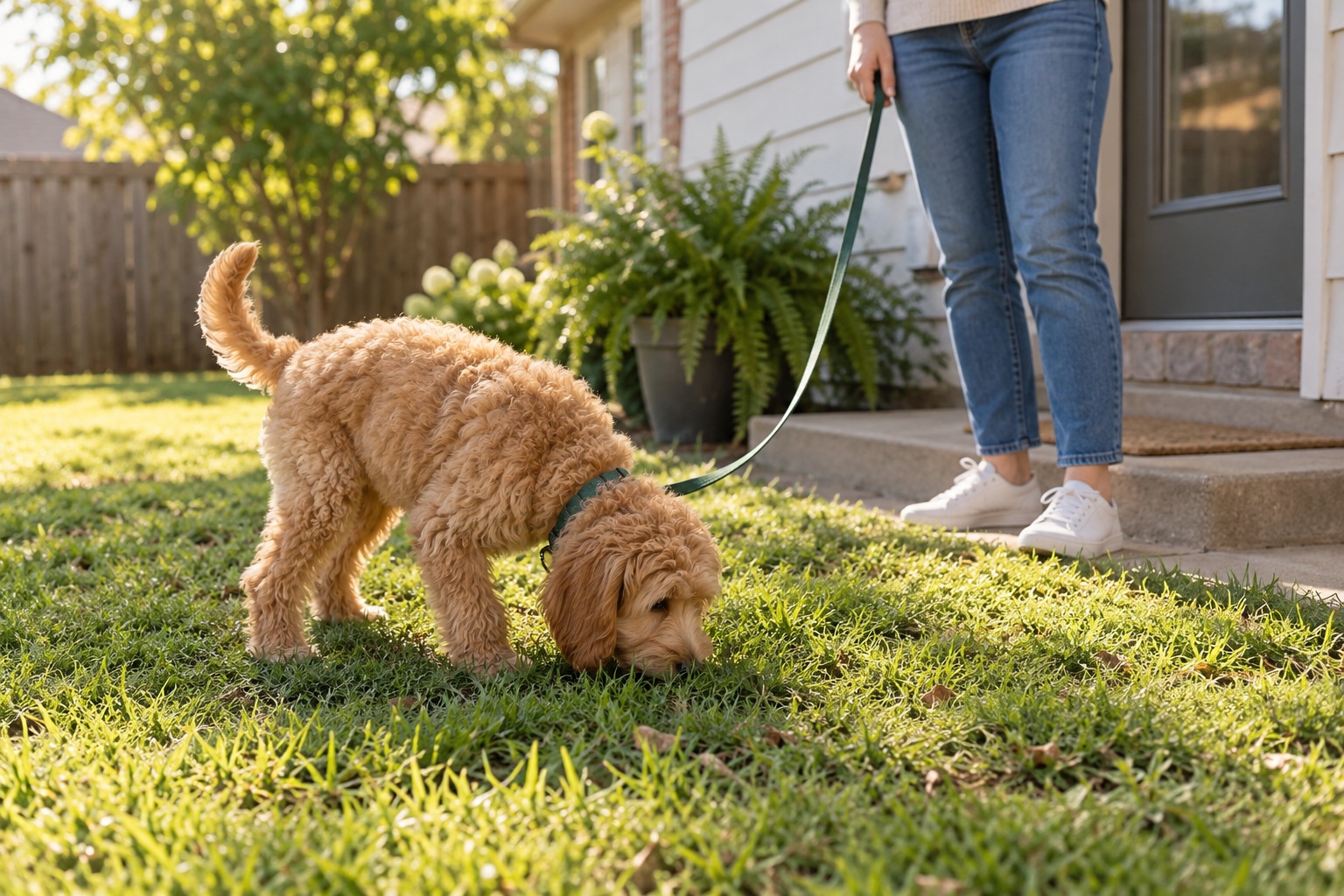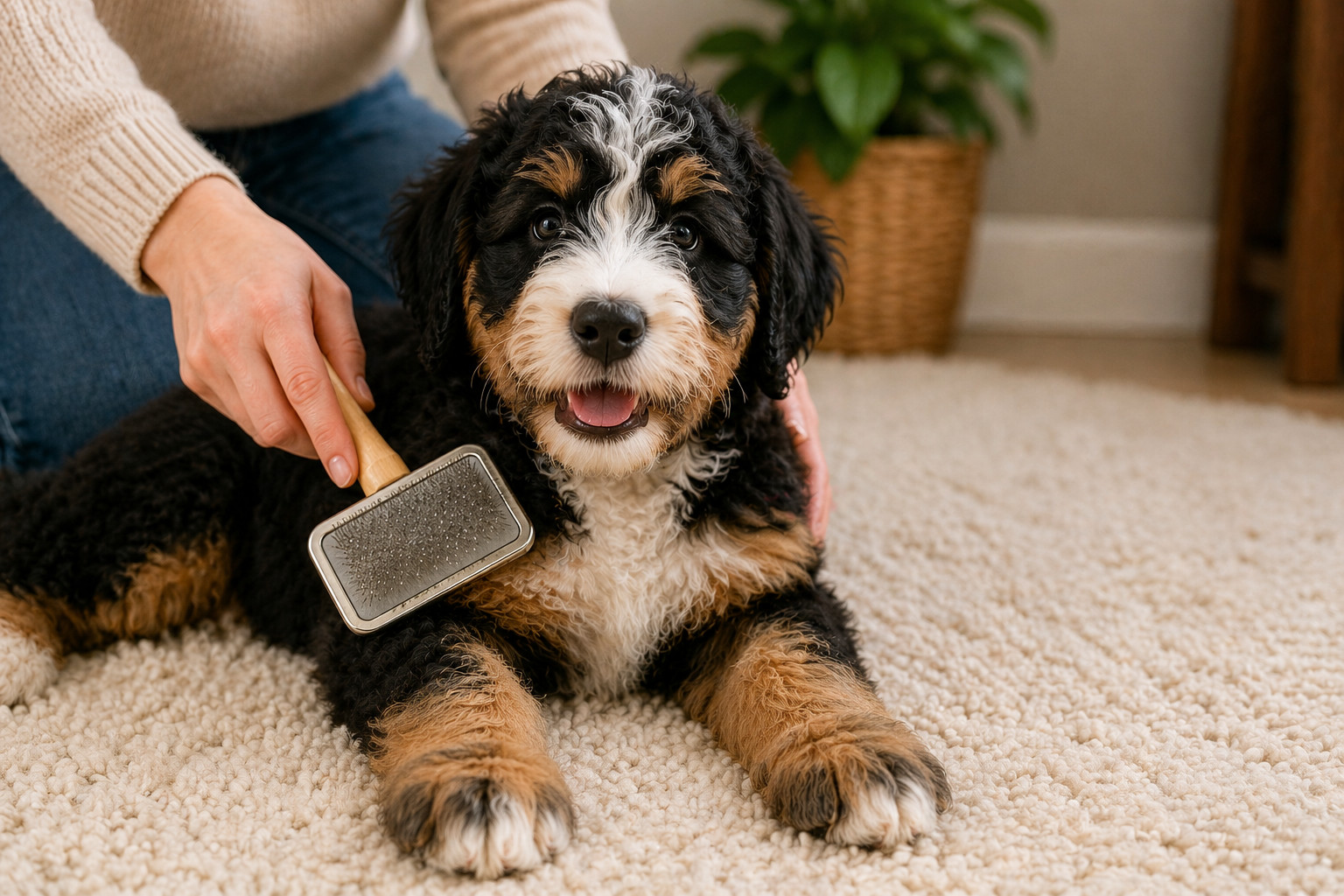
Spring is a wonderful time to enjoy life with a doodle puppy. The weather warms up, the grass grows, and your puppy gets more chances to explore the yard, go on walks, and play outside with the family.
But spring also brings a few coat-care challenges.
Mud, rain, burrs, pollen, shedding undercoat, and longer outdoor play sessions can all make your puppy’s coat harder to manage. For doodles and Bernedoodles, regular coat care is especially important because their soft, wavy, or curly coats can mat if they are not brushed often enough.
The good news is that doodle grooming does not have to feel overwhelming. With a simple brushing routine and a few good habits, you can help prevent matting and keep your puppy comfortable through the spring season.
Why Spring Coat Care Matters for Doodles
Doodle coats are beautiful, but they need consistent attention. Depending on the puppy’s genetics, a doodle coat may be more wavy, curly, or somewhere in between.
That soft texture can trap:
- Moisture from rain or wet grass
- Dirt and mud from outdoor play
- Burrs, seeds, and small sticks
- Loose hair near the skin
- Tangles behind the ears, legs, and collar area
When small tangles are ignored, they can tighten into mats. Mats can pull on the skin and become uncomfortable for your puppy. In some cases, severe matting may need to be handled by a professional groomer.
A regular spring grooming routine helps you catch small tangles early before they become a bigger problem.
Common Spring Coat Problems
Mud Tangles
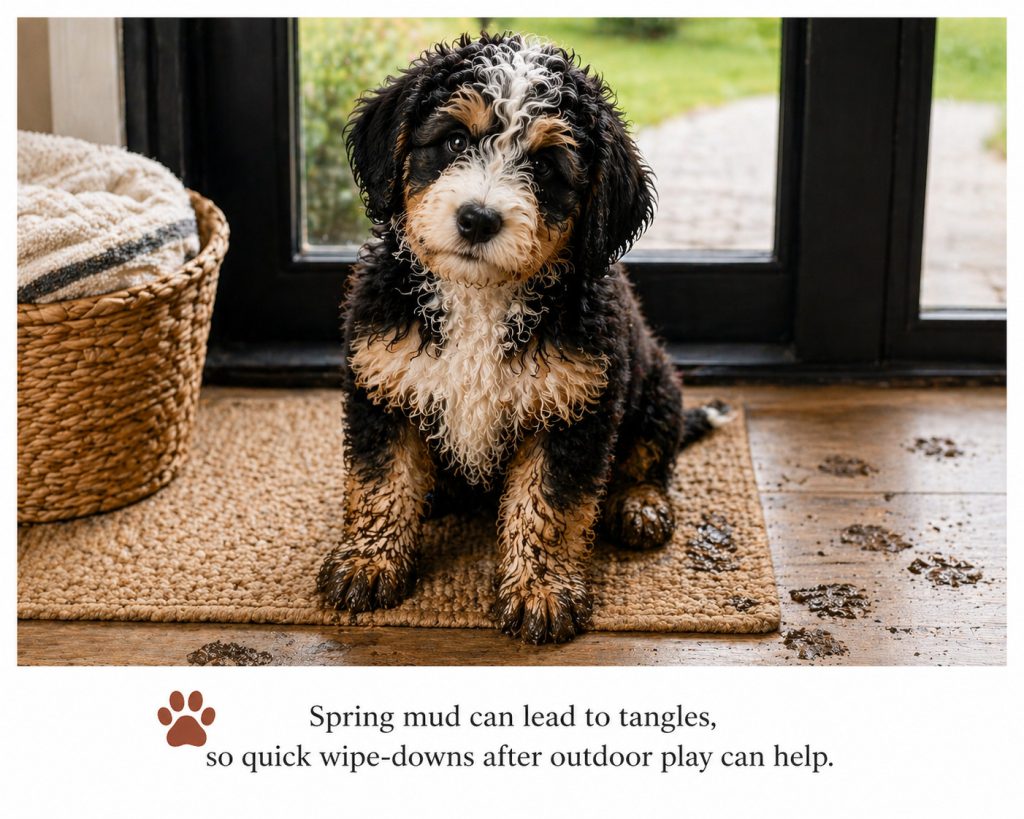
Spring rain and soft ground can turn a quick potty break into a muddy adventure. Mud often sticks to the legs, paws, belly, and tail.
If mud dries in the coat, it can create clumps and tangles. A quick wipe-down after outdoor play can help prevent bigger brushing sessions later.
Burrs and Seeds
Oklahoma yards, fields, and walking areas can have burrs, grass seeds, and small plant pieces that cling to a doodle coat.
These often hide in:
- Ears
- Chest
- Tail
- Legs
- Paws
- Armpit area
Removing burrs early is much easier than trying to untangle them after they have worked deeper into the coat.
Collar and Harness Mats
Any area where something rubs against the coat is more likely to mat. Collars, harnesses, and even cute puppy bandanas can create friction.
Check these areas regularly, especially if your puppy wears a harness on walks.
Ear and Leg Tangles
Behind the ears is one of the most common places for mats to form. The same is true for the legs and armpits, where movement creates rubbing.
These areas should be part of your normal brushing routine, even if the rest of the coat looks fine.
A Simple Spring Brushing Routine
A good brushing routine does not have to take an hour. Short, consistent sessions are usually better than waiting until the coat is tangled.
For many doodle families, a simple routine might look like this:
- Quick check after outdoor play
- Light brushing several times per week
- More thorough brushing once or twice per week
- Regular professional grooming on a schedule
The exact routine depends on your puppy’s coat type, age, activity level, and haircut length.
Start With Short Sessions
If your puppy is young, keep brushing sessions short and positive. A few calm minutes can build better habits than one long, frustrating session.
Try brushing when your puppy is sleepy or relaxed. Offer praise, gentle handling, and breaks as needed.
The goal is to teach your puppy that grooming is a normal, safe part of family life.
Focus on High-Tangle Areas
Even if you do not brush the entire body every day, check the spots where mats usually start:
- Behind the ears
- Under the collar
- Chest
- Armpits
- Belly
- Tail
- Legs
- Around the paws
These small areas make a big difference.
Brush Before Bathing
If your puppy has tangles, brush them out before a bath whenever possible. Water can tighten tangles and make mats harder to remove.
If your puppy is very tangled or matted, consider asking a professional groomer for help instead of pulling or cutting mats yourself.
Tools That Can Help With Doodle Grooming
You do not need a huge grooming kit, but a few basic tools can make coat care easier.
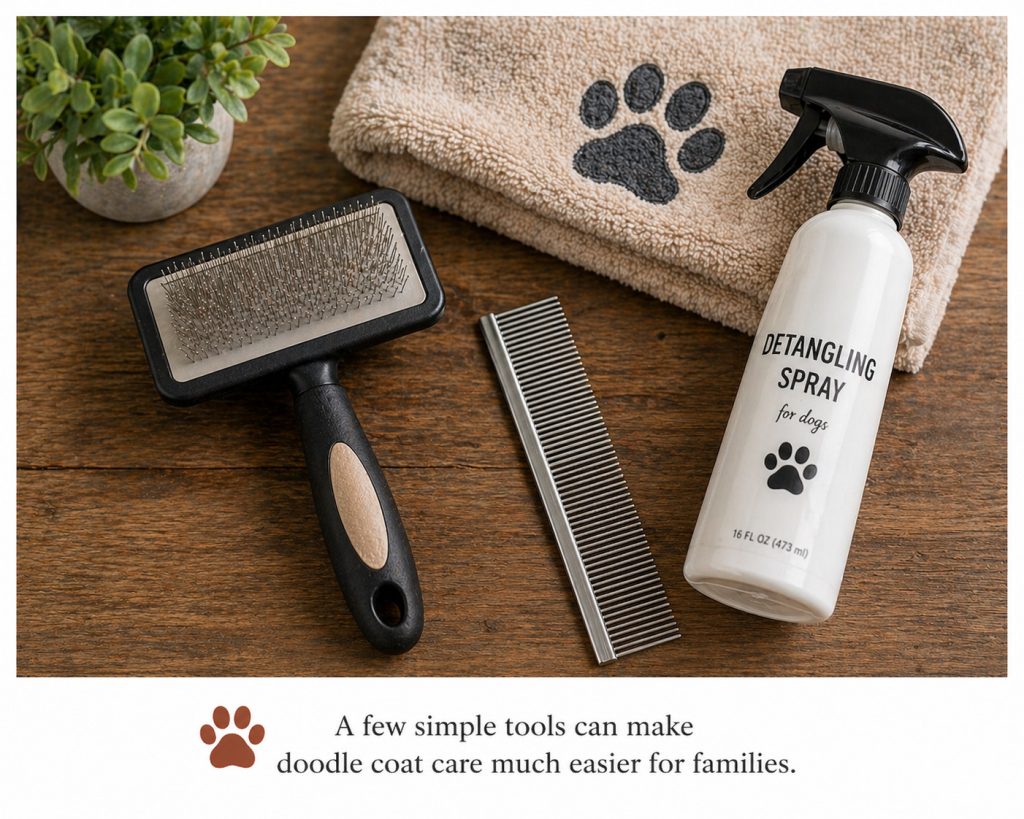
Common doodle grooming tools include:
- A slicker brush for brushing through the coat
- A metal comb to check for hidden tangles
- Puppy-safe wipes or a towel for muddy paws
- A detangling spray made for dogs
- A grooming table or non-slip surface, if appropriate
A comb is especially helpful because it can show whether the coat is truly brushed through. Sometimes the top layer looks smooth, but tangles remain closer to the skin.
For puppies, choose gentle tools and use light pressure. Grooming should not feel scary or uncomfortable.
Burr Removal Tips for Spring
Burr removal is much easier when you catch them early. After walks, outdoor play, or trips through taller grass, do a quick coat check.
How to Handle Burrs Gently
If you find a burr:
- Stay calm so your puppy does not get nervous.
- Hold the hair near the skin to avoid pulling.
- Use your fingers to loosen the burr first.
- Follow with a comb or brush if needed.
- If it is stuck deeply, ask a groomer for help.
Avoid yanking, cutting too close to the skin, or forcing the burr out. If the burr is near the eye, ear canal, or sensitive area, it is best to get professional help.
Looking for a family-raised doodle or Bernedoodle puppy in Oklahoma?
You can view current and upcoming puppies here: Puppies for Sale
To learn more about our approach, visit: About and Parents
Creating a Grooming Schedule
A consistent grooming schedule helps prevent last-minute stress. Instead of waiting until your puppy looks messy, plan grooming as part of normal puppy care.
A sample spring schedule might include:
- Daily: Quick paw, ear, and burr check after outdoor play
- Several times per week: Light brushing in high-tangle areas
- Weekly: More complete brushing and comb check
- Every few weeks: Nail, ear, and coat check as needed
- Regularly: Professional grooming based on coat type and length
Ask your groomer how often your puppy should come in based on coat texture and your preferred haircut.
If you are unsure about ear cleaning, skin concerns, or anything that seems uncomfortable for your puppy, check with your veterinarian.
Should You Keep a Doodle Coat Shorter in Spring?
Many families prefer a shorter, easier-to-maintain haircut during warmer months. A shorter coat can make brushing, mud cleanup, and burr checks simpler.
That does not mean your puppy has to be shaved short. There are many practical doodle haircuts that still look soft and cute while being easier for busy families to maintain.
Talk with your groomer about:
- Your puppy’s coat type
- How often you can realistically brush
- How active your puppy is outside
- Whether your yard has burrs or tall grass
- Your preferred style
The best haircut is one that keeps your puppy comfortable and fits your family’s routine.
Helping First-Time Puppy Owners Build Good Habits
If this is your first doodle or Bernedoodle puppy, grooming may feel like a lot at first. That is completely normal.
Start simple.
Focus on building trust and consistency. Your puppy does not need to be perfect during grooming right away. The goal is steady progress.
Helpful habits include:
- Touching paws gently so nail trims are less stressful later
- Looking in and around the ears during calm moments
- Brushing for a few minutes at a time
- Rewarding calm behavior
- Making grooming part of your weekly routine
These small steps help your puppy grow into a confident adult dog who is easier to care for.
How Our Program Helps
At Red Barn Doodles and More, we know families are not just choosing a puppy. They are preparing for years of companionship, care, and learning.
Our program is built around ethical breeding, transparency, and support for families. We want you to feel informed before bringing your puppy home, not surprised afterward.
That includes helping families understand:
- What to expect from a doodle or Bernedoodle coat
- Why grooming matters
- How to prepare for puppy care at home
- What questions to ask before choosing a puppy
- How to build a healthy routine from the beginning
We believe families deserve honest guidance, clear communication, and ongoing support as they welcome a puppy into their home.
You can learn more about our breeding program here: About
You can meet our parent dogs here: Parents
Final Thoughts on Spring Doodle Grooming
Spring is a fun season for puppies, especially curious doodles who love to explore. A little extra coat care can help prevent matting, reduce stress, and keep your puppy feeling comfortable.
The key is consistency.
You do not have to be a professional groomer to care for your puppy well. A simple brushing routine, regular burr checks, and a realistic grooming schedule can go a long way.
When in doubt, ask your groomer or veterinarian for guidance. Every puppy is different, and the best routine is one that fits your puppy’s coat and your family’s lifestyle.
FAQ
How often should I brush my doodle in spring?
Many doodles benefit from brushing several times per week, especially in areas that mat easily, like behind the ears, under the collar, legs, and belly. The exact routine depends on your puppy’s coat type and haircut length.
What is the best way to prevent matting?
The best way to prevent matting is to brush consistently, check high-friction areas, and keep a regular grooming schedule. A comb can help you find tangles that a brush may miss.
Should I brush my doodle before or after a bath?
It is usually best to brush before a bath. Water can make existing tangles tighten, which may make mats harder to remove.
How do I remove burrs from my puppy’s coat?
For gentle burr removal, use your fingers first and hold the hair near the skin to avoid pulling. If the burr is stuck or near a sensitive area, ask a groomer for help.
Do Bernedoodles need professional grooming?
Most Bernedoodles and doodles benefit from regular professional grooming. Your groomer can recommend a schedule based on your puppy’s coat, age, and haircut style.
What if my puppy hates being brushed?
Start with very short, positive sessions. Brush when your puppy is calm, use praise, and focus on building trust. If grooming is stressful or painful, ask a professional groomer for advice.
Have questions about bringing home a doodle or Bernedoodle puppy?
We are happy to help you understand our program, available puppies, and what to expect.
Start here: Puppy Application
Or reach out with questions: Contact