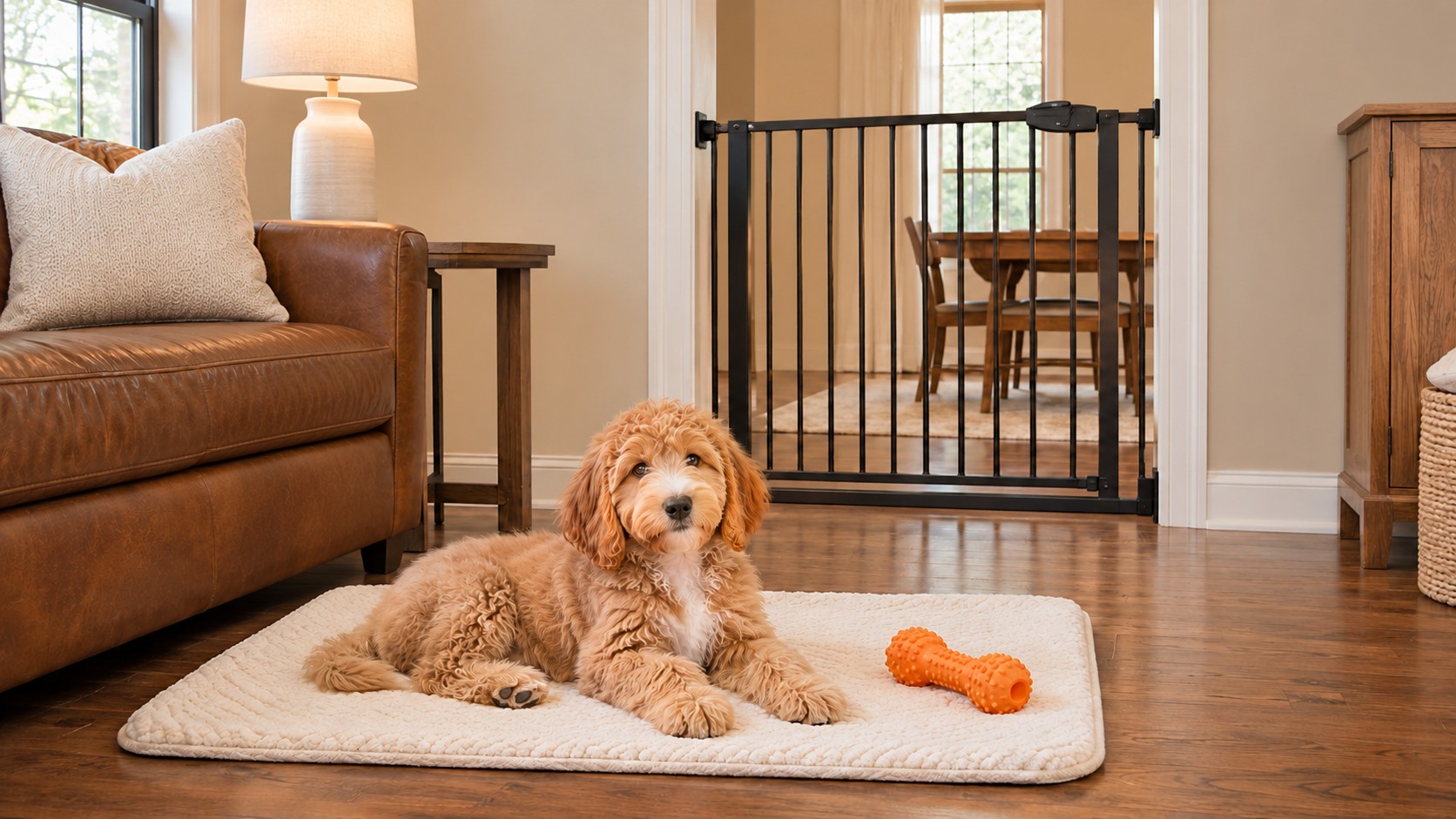
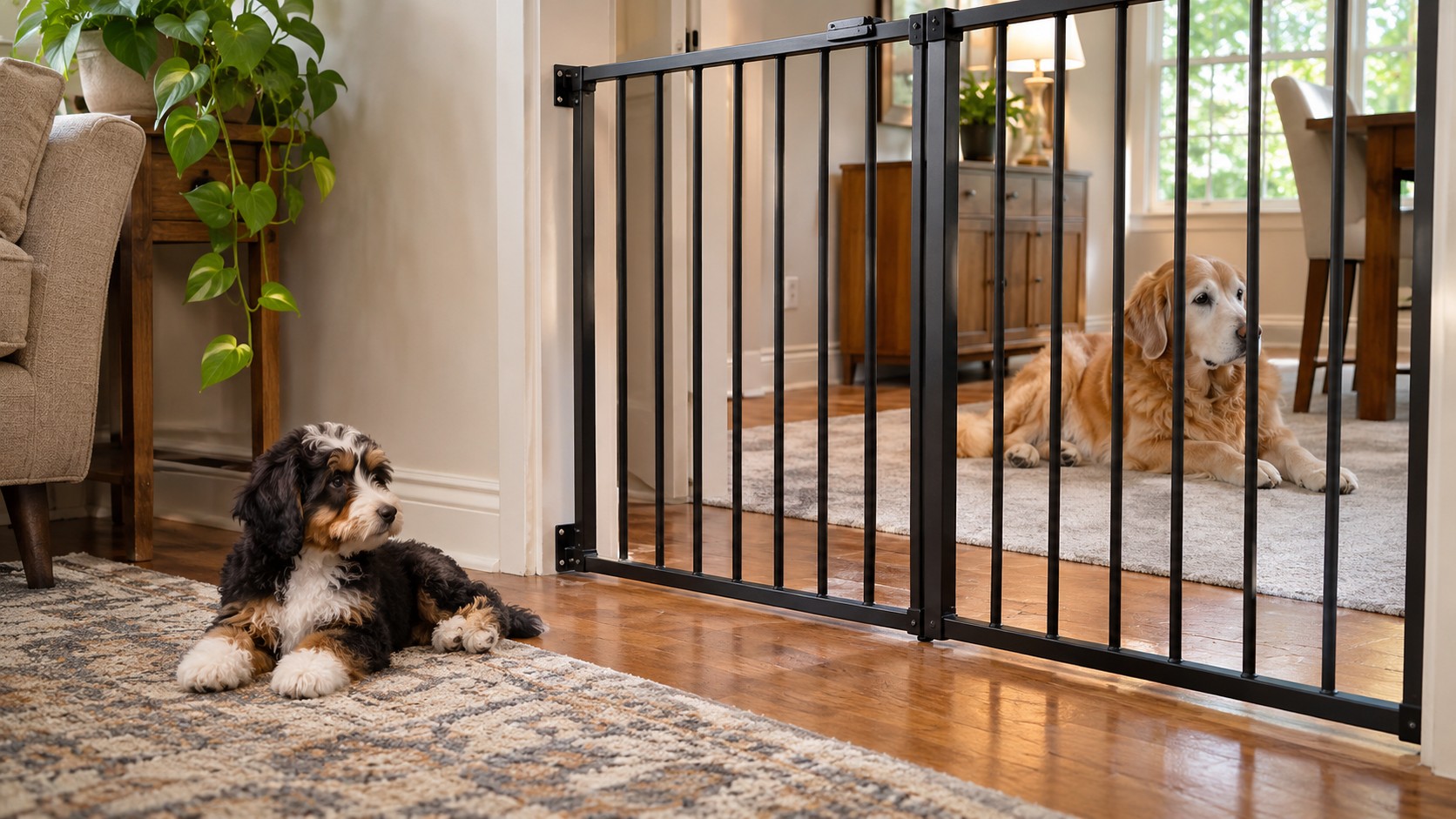
If you’re wondering how to introduce a puppy to an older dog, start with enough space for both dogs to look away and move on. Ask another adult to help with a brief outdoor meeting, then bring the dogs indoors separately. Set up a gate or closed door before pickup so the puppy can settle and your resident dog can take a break without being followed.
Your older dog may want to sniff the newcomer, or may be more interested in going back to bed. Either response is fine. On the first day, calm time near each other is plenty. Use what you see from both dogs to decide how much contact to try next.
Set up two spaces before pickup
Give each dog a place to drink and rest, and use a closed door or secure gate to separate them. Keep the resident dog’s usual bed accessible to them and out of the puppy’s reach. Feed in separate rooms, pick up bowls when both dogs are done, and put away chews and favorite toys before they spend time together.
Keep your older dog’s usual walks, meals, and time with you as predictable as possible. Decide in advance which adult will handle the puppy at the door and which will take the resident dog outside. If your dog has a history of guarding, snapping, or biting, get advice from a qualified reward-based trainer or veterinary behavior professional before arranging contact. Ask your veterinarian for guidance if your older dog has pain or trouble moving, or if you’re unsure where your puppy can safely go before finishing vaccinations.
Keep the first dog introduction short
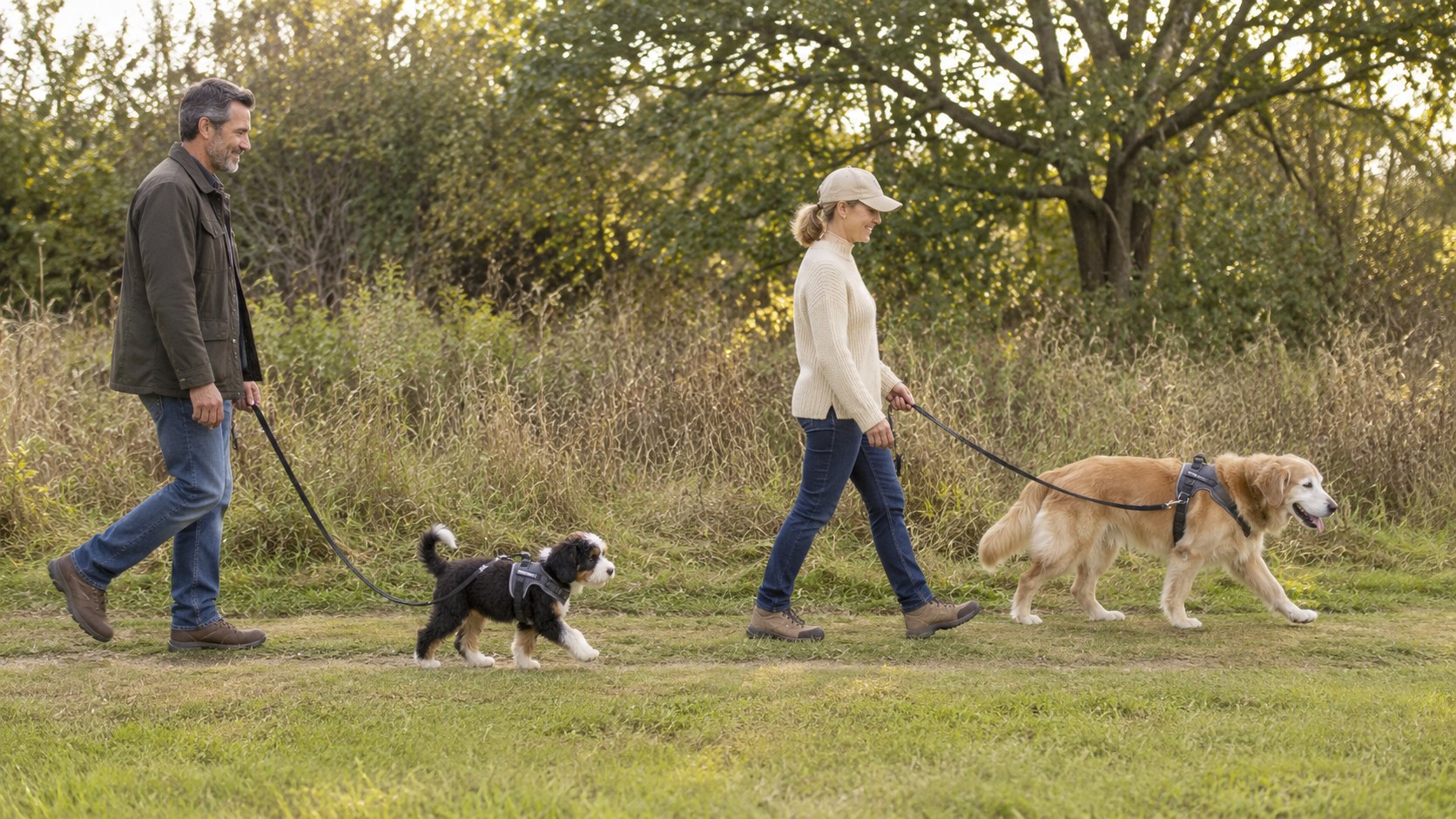
Choose a quiet, roomy place neither dog feels the need to defend. Ask your veterinarian about an appropriate location for the puppy; skip dog parks and crowded trails. The Seattle Humane introduction guide describes using two handlers and starting at a distance. One person handles each dog with a comfortable, well-fitted harness or collar and a loose leash.
- Walk in the same direction on separate paths. Start far enough apart that both dogs can sniff the ground, look away, and respond to their handlers.
- Close the distance gradually only while both dogs stay relaxed. If one stiffens, stares, pulls hard, or tries to retreat, make more room.
- If both choose to approach with loose bodies, let them sniff briefly. Then call them apart and walk a little more. You can finish the session without a greeting if either dog seems unsure.
Avoid holding the dogs nose to nose or letting the puppy rush a stationary dog. Plan for a little space on the way home, too. One person can take the resident dog in first and settle them behind a barrier while the other brings the puppy through the entry.
Help your new puppy and resident dog share the house
Start with short, supervised visits in an open room with room to turn away. Avoid hallways, doorways, and other places where a dog could feel cornered. Let the puppy learn that a call from you means it’s time to turn back. If they keep trying to follow your older dog, guide them away and give both dogs a break. Keep food, toys, and chews out of shared space at first.
Watch the dogs during ordinary moments: can the older dog move past the puppy without being chased? Can the puppy return to you when called away? If you can’t give the dogs your full attention, separate them. Use a closed door instead of a see-through gate if either dog keeps barking or pacing at the barrier.
Notice when either dog needs a break
Loose bodies, curved approaches, and pauses during play can be encouraging. Watch for either dog repeatedly turning away, tucking their tail, freezing, staring, or trying to hide. If your older dog growls, calmly give both dogs more space. A growl tells you the interaction has become uncomfortable; scolding it can make that warning harder to see next time.
Interrupt one-sided chasing early and let each dog settle separately. If you see repeated lunging, snapping, or guarding, stop direct meetings and get qualified help. Keep interactions short on days when the resident dog is tired or the puppy is having trouble settling. If the dogs were calm yesterday and struggle today, use the easier setup again.
Give the older dog a way out every time
Imagine your older dog is asleep when the puppy trots over. Call the puppy to you before they reach the bed and offer a quiet activity in another part of the room. If the puppy keeps going back, use the gate for a while. This lets your older dog finish resting without having to move or warn the puppy away.
Use the same idea when your resident dog wants to leave a shared room. Give them a clear path and ask the puppy to come with you in the other direction. Ending a visit while both dogs are still calm gives you a setup you can repeat tomorrow.
How Our Program Helps
If you’re bringing a second dog home, tell us what your resident dog’s day looks like and how they respond to young dogs. We can share what we’ve observed about a puppy’s play and settling in familiar surroundings, explain the routines we’ve started, and help you plan pickup. You can describe your dog’s needs in the Puppy Application and bring follow-up questions once your puppy is home.
Frequently Asked Questions
Should my older dog meet the puppy in our yard?
For a first meeting, choose a quiet, roomy spot away from your resident dog’s usual territory if your veterinarian says it’s suitable for your puppy. Use two handlers and enough distance to walk without crowding.
What if my older dog ignores the puppy?
Give them room. Looking away or moving off is an acceptable choice. Keep the puppy from following and reward calm behavior on both sides.
Is it okay if my older dog growls?
Treat a growl as a cue to calmly separate the dogs and adjust the setup. If it happens repeatedly or you see lunging, snapping, or guarding, pause direct contact and seek qualified help.
Can the dogs share a water bowl or bed?
Start with separate water stations and beds so neither dog has to approach the other to drink or rest. Keep meals and valued items separate during the transition.
When can I leave the dogs alone together?
There’s no set number of days. Keep them apart when you can’t supervise until you’ve seen repeated, relaxed interactions in everyday situations. Get professional guidance if there’s a history of conflict.