If you’re figuring out how to puppy-proof your house, start with the rooms your puppy will actually use on day one. Set up one safe area near the family, clear the path to the potty spot, and close off the rest. You can open more space as you learn what your puppy can reach, chew, or squeeze behind.
Before pickup, walk that route at puppy height. Look under the couch, behind the side table, and around the laundry basket. Then walk it the way you will on a busy evening, carrying groceries or helping a child. A gate only helps if everyone can close it easily and remembers to latch it.
Living room: clear the floor and hide cords
To puppy-proof a living room, start where little things collect: under cushions, around the coffee table, and near outlets. Pick up remote controls and spare batteries, pens, coins, hair ties, and children’s toys. Put remotes and charging stations somewhere a puppy can’t reach. Route cords behind a secure barrier or use covers that prevent access; check what still hangs down when someone unplugs a device.
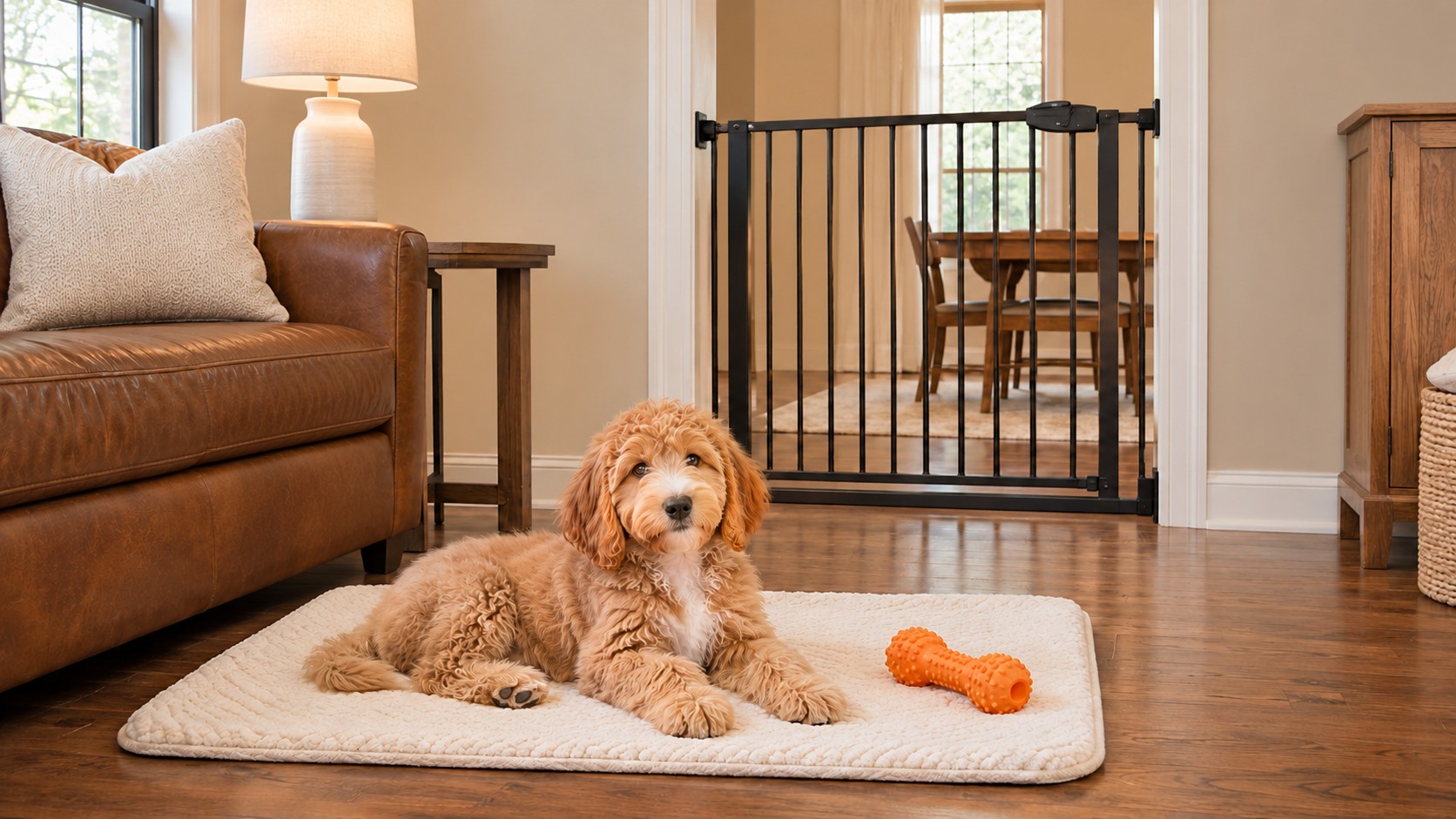
Block the fireplace and access to recliner mechanisms, and keep your puppy away while furniture is moving. Verify that any plants in reach are safe for dogs before leaving them there. If this is your puppy’s starter room, add a washable resting spot, water, and a few appropriate toys. Give children a place outside the puppy area to build with small pieces.
Kitchen and dining room: manage food, trash, and foot traffic
Use a trash can with a secure lid or keep it in a closed cabinet your puppy cannot open. Move cleaners, dish pods, and food out of reach. Keep sugar-free gum, chocolate, and other foods your puppy shouldn’t get into off low surfaces and out of accessible bags. Push chairs in if they provide a route to a counter, and sweep where food tends to fall after dinner.
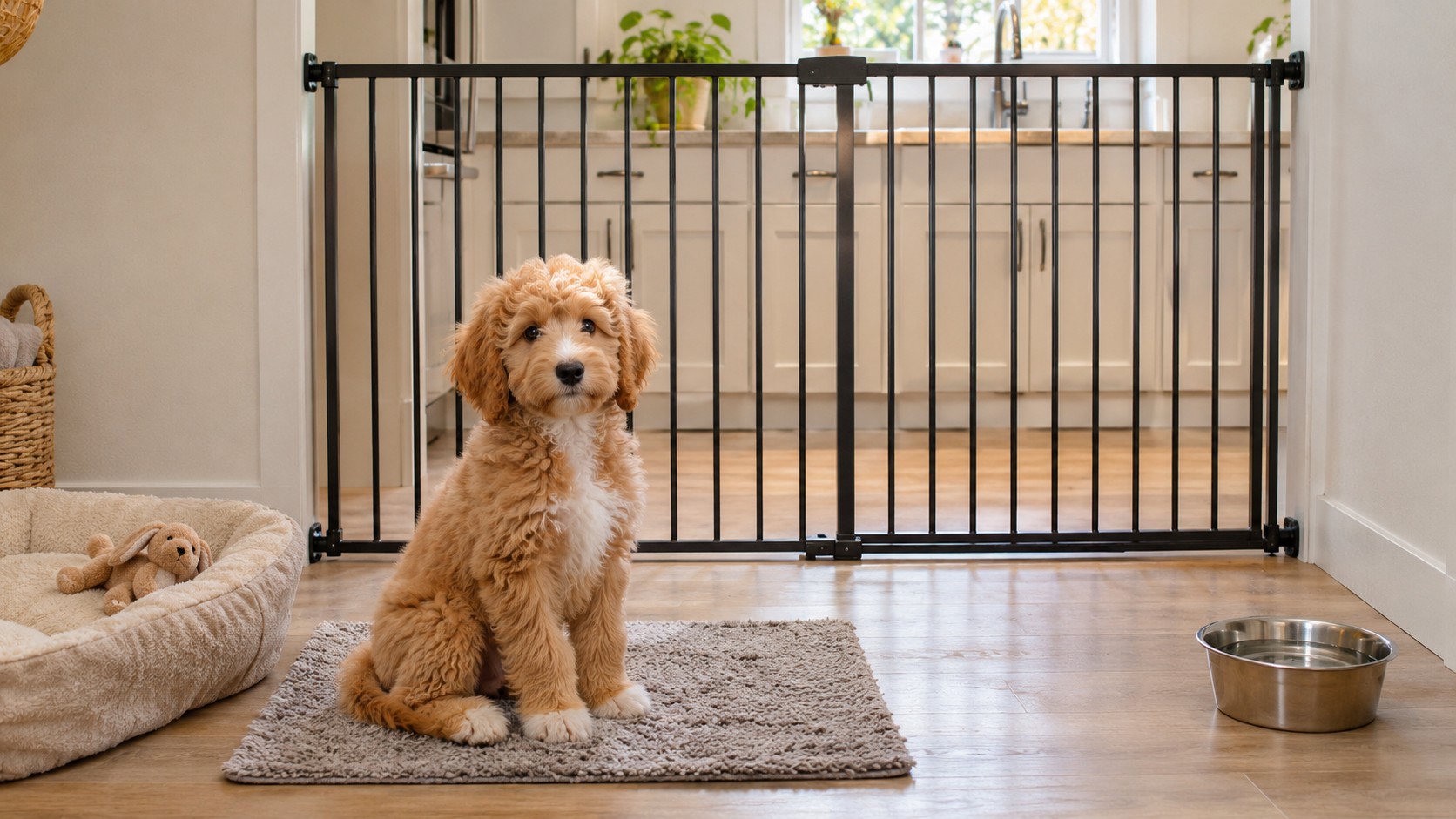
Put your puppy behind a gate before you carry hot dishes, load the dishwasher, or unpack groceries. A mat just outside the kitchen gives a supervised puppy a place to settle nearby while you work. If your household eats at a low table, plan where the puppy will be before plates come out.
Bathroom, laundry, and bedrooms: use closed storage
Keep medications, supplements, razors, personal care products, and cleaning supplies behind secured doors. Keep toilet lids and bathroom doors closed as needed, and choose a covered trash can your puppy can’t tip open. In the laundry area, put detergent and dryer sheets away right after use. Store socks and underwear in a closed hamper; check for stray items whenever you carry a load through the house.
Use a landing spot above puppy height for earbuds, jewelry, purses, and work bags. In guest rooms, give visitors somewhere to put bags before they set them on the floor. Take a look under beds and dressers, too. If reaching a puppy in a tight spot would be difficult, block the gap or close the door before the puppy discovers it.
Entryway, stairs, garage, and yard: check the boundaries
Practice having an adult secure the puppy before anyone opens an outside door. A gate set back from the entry can help on delivery days or when children come home. Keep shoes and dangling leashes off the floor. Block stair access when you can’t supervise, and use a gate specifically approved for the location, especially at the top of stairs.
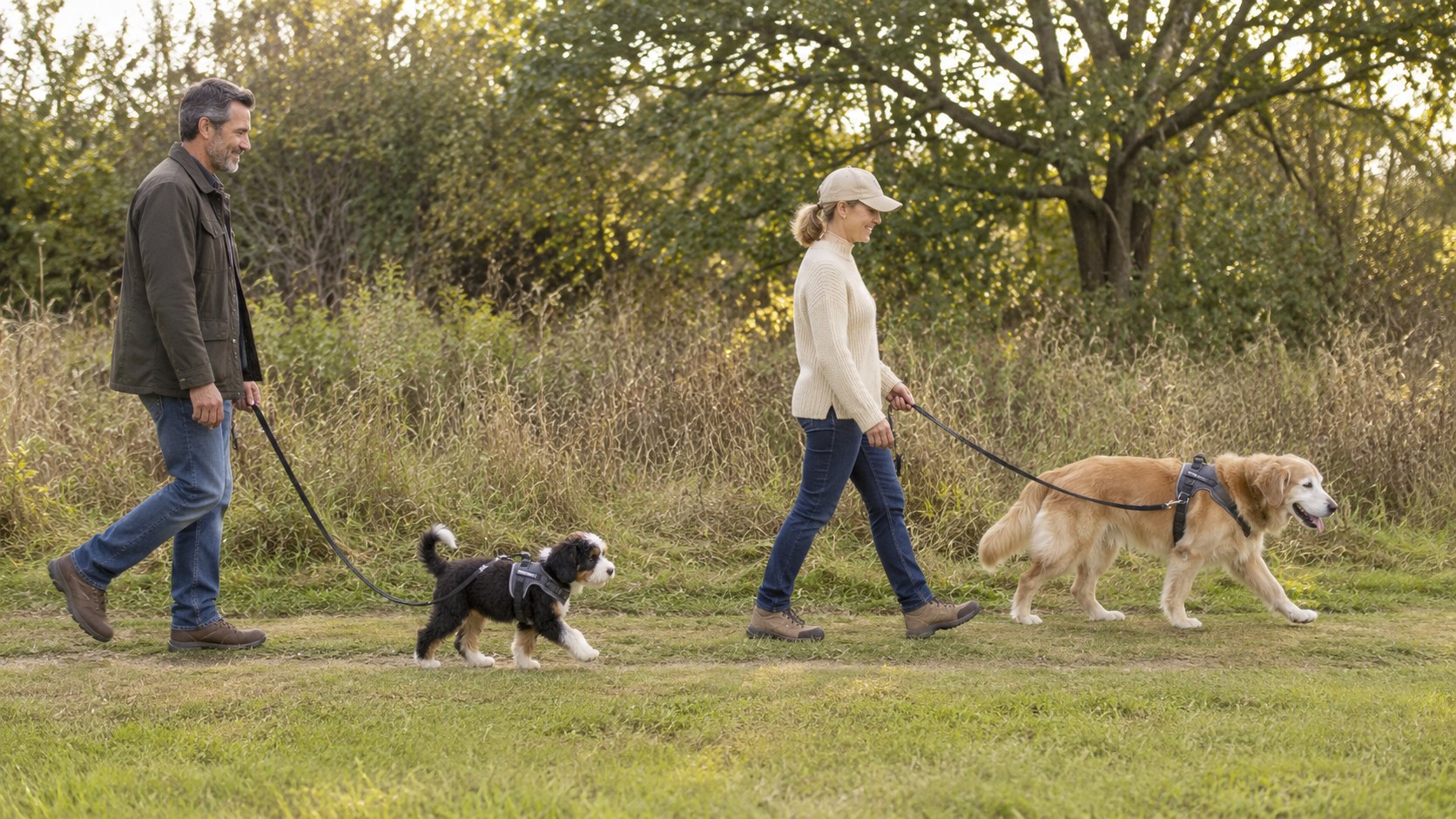
Keep the garage, shed, and utility closets off limits. Outside, check fence bottoms, gaps beside posts, and whether the latch catches every time. Pick up tools, landscape products, and small debris. Supervise yard trips, including in a fenced yard, and use a leash on the route if it isn’t secured. The ASPCA’s home safety tips can help you look for hazards you might otherwise miss. If you suspect your puppy swallowed something unsafe, call your veterinarian promptly.
Puppy-proofing checklist for pickup day
- Set up one puppy-safe zone with water, a rest area, and suitable toys. Check that every gate closes and latches.
- Get down to floor level and clear cords, batteries, small toys, socks, and loose items along the puppy’s route.
- Secure trash, food, cleaners, medicines, and bags before opening any new room to the puppy.
- Walk the potty route, check the fence and latch, and agree on who handles the door when people arrive.
- Make a quick floor check part of your evening routine. Repeat it after visitors, deliveries, or a round of children’s play.
Do a two-minute reset before bedtime
Walk from the puppy area to the back door and look for what changed since breakfast. A package might have left a scrap of tape in the hallway. A guest may have plugged in a charger beside the couch. Put those things away before the last potty trip, when everyone is tired and less likely to notice.
Give each item that moves often a home of its own: a shelf for chargers, a closed hamper for socks, and a hook for bags. If you keep finding the same thing on the floor, change where it’s stored or block access to that spot.
How Our Program Helps
At Red Barn, we’ll talk through your home setup and explain the routines your puppy has been introduced to before pickup. Our FAQs cover common questions about crate and potty training. If you have an open floor plan, small children, or a dog who already has the run of the house, tell us where you’re thinking of putting the starter area so we can help you think it through.
Frequently Asked Questions
Do I need to puppy-proof every room before pickup?
Start with one secure area, the route to the potty spot, and any rooms the puppy will use right away. Close off other rooms until you’ve checked them and can supervise an introduction.
What is the easiest way to puppy-proof an open floor plan?
Use a securely installed gate where the opening allows it or a stable exercise pen on a level surface. Pick a location near the family where the puppy has space to rest away from busy paths.
Is putting cords behind furniture enough?
Check from puppy height. If you can still see an opening or reach a loose loop, block access or reroute the cord. Check chargers again after someone moves or unplugs them.
Can my puppy explore a fenced yard alone?
Supervise at first, even with a fence. Look for gaps, low spots, debris, and an unreliable latch; you’ll also learn where your puppy tends to investigate.
When can I give my puppy more room?
Open one checked room at a time while you can watch. If your puppy keeps finding things to chew or disappearing from view, go back to the smaller area and try again later.