Bringing Your New Puppy Home
Bringing home a new puppy is exciting, emotional, and maybe a little nerve-wracking. For many families, pickup day is the moment everything starts to feel real. You have chosen your puppy, prepared your home, and counted down the days. Now it is time for the first ride home.
If you are traveling with a new puppy for the first time, a little preparation can make a big difference. Your puppy may be leaving familiar people, littermates, sounds, and routines. The car ride home may be their first big adventure, so the goal is not perfection. The goal is comfort, safety, and a calm start to your life together.
Whether you are driving across town or several hours across Oklahoma, this guide will help you plan your puppy car ride, pack the right supplies, and reduce stress along the way.
Before Pickup Day: Plan the Ride Home
A smooth first ride starts before you ever put your puppy in the car. Try to keep pickup day simple and low-pressure.
Choose the best time of day
When possible, schedule pickup at a time when you are not rushed. Puppies can pick up on excitement and stress, so leaving extra time helps everyone stay calm.
Avoid planning several errands before or after pickup. Your puppy’s first car ride home should be direct, gentle, and focused on helping them settle.
Decide who is coming with you
It can help to bring one extra adult if you have a longer drive. One person can drive while the other keeps an eye on the puppy. If children are coming along, talk with them ahead of time about staying calm, using quiet voices, and giving the puppy space.
The first ride home is exciting, but too much noise and handling can feel overwhelming to a young puppy.
Prepare your vehicle
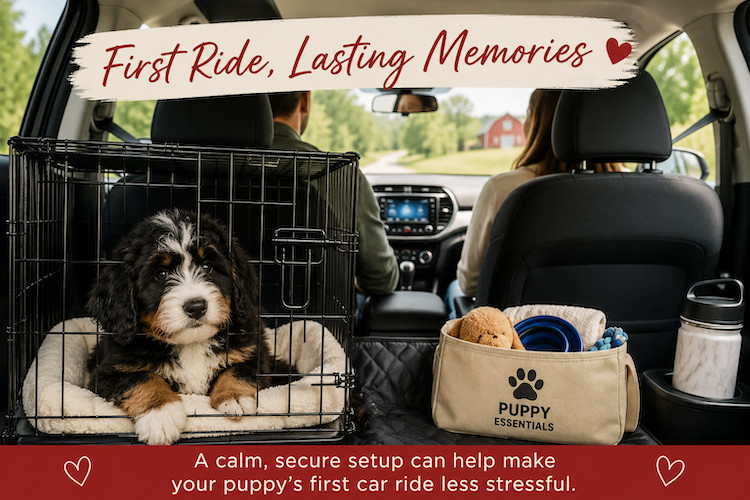
Before pickup day, choose where your puppy will ride. A crate or secure travel carrier is often the safest and calmest option. Place it where it will not slide around, and add a washable towel or small blanket.
Keep the car temperature comfortable, especially during hot Oklahoma weather. Avoid placing your puppy in direct sun for long periods, and never leave your puppy alone in a parked car.
Puppy Travel Checklist: What to Bring
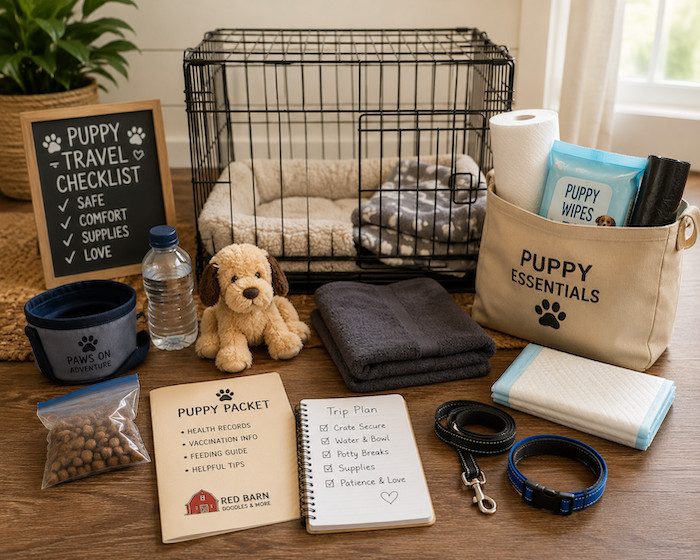
Packing a simple puppy travel checklist can prevent small problems from becoming stressful. You do not need to overpack, but having the basics nearby is helpful.
Bring these supplies for the ride
- Crate or secure puppy carrier
- Soft towel or washable blanket
- Paper towels
- Puppy-safe wipes
- Extra trash bags
- Small water bowl
- Bottled water
- Collar or harness and leash
- A few familiar items from the breeder, if provided
- A change of towel or blanket
- Your breeder’s instructions or paperwork
- Vet information, if already scheduled
For longer drives, it is also helpful to bring an extra shirt for yourself. Puppies can have accidents, drool, or get carsick, especially during their first big trip.
How to Make the First Puppy Car Ride Less Stressful
Your puppy may be sleepy, curious, nervous, or wiggly. All of those reactions are normal. The best thing you can do is keep the environment calm and predictable.
Keep the ride quiet and gentle
Soft voices, minimal handling, and a steady ride can help your puppy relax. This is not the time for loud music, lots of visitors, or passing the puppy around.
If your puppy whines, try not to panic. Some puppies settle quickly, while others need time. Speak calmly, but avoid constantly opening the crate or making the ride too stimulating.
Use a crate or carrier for safety
Even if your puppy wants to sit in your lap, a secure crate or carrier is usually a better choice. Puppies can wiggle, chew, or climb unexpectedly. A crate helps keep your puppy contained and prevents distractions for the driver.
If you use a crate, make it comfortable but simple. A towel or blanket is usually enough. Avoid loose toys or anything that could become unsafe during the drive.
Plan potty breaks carefully
If you have a short drive, your puppy may not need a stop. For longer drives, plan quiet potty breaks away from busy dog areas. Young puppies are still building immunity, so avoid high-traffic pet relief areas where many unknown dogs have been.
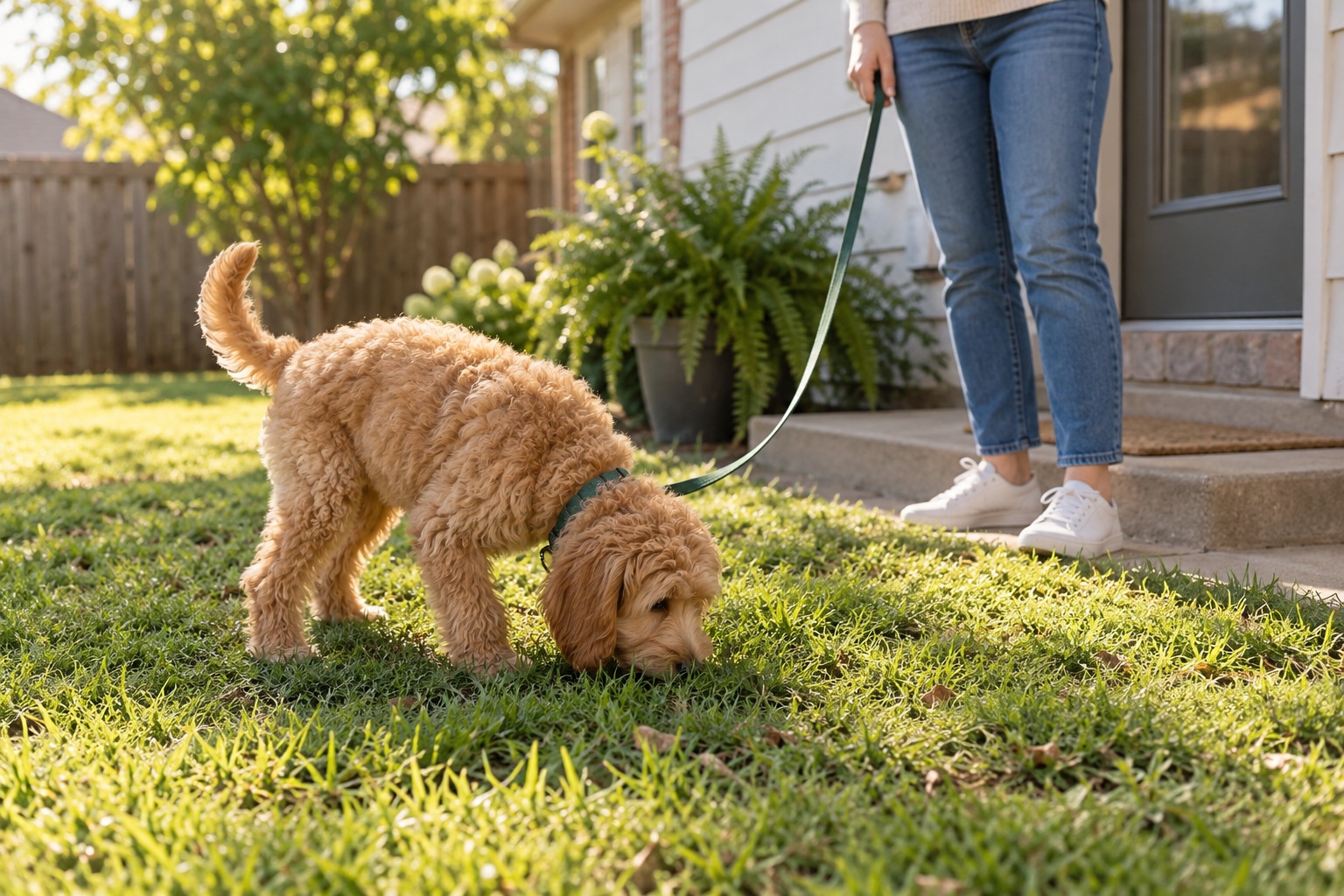
Choose a calm grassy spot when possible, use a leash, and keep the break short. Praise gently if your puppy goes potty, then return to the car.
If you are unsure what is safest for your puppy before vaccinations are complete, ask your veterinarian for guidance.
What About Motion Sickness?
Motion sickness can happen during a puppy car ride, especially if your puppy has not traveled much before. Some puppies drool, whine, lick their lips, or vomit during the ride.
Ways to reduce car ride discomfort
- Keep the car cool and well-ventilated
- Drive smoothly and avoid sudden stops when possible
- Use a secure crate or carrier
- Avoid giving a large meal right before travel
- Keep cleanup supplies within reach
If your puppy seems very uncomfortable, or if car sickness continues after the first few rides, talk with your veterinarian. They can help you decide what is normal and what may need extra support.
Need help planning pickup day?
We know bringing home a new puppy comes with lots of questions. From pickup timing to what to pack, we are happy to help families feel prepared before the big day.
Feel free to contact us about planning your puppy pickup.
Arriving Home: Keep the First Day Simple
Once you get home, it can be tempting to introduce your puppy to everyone, show them every room, and start playing right away. But after traveling, your puppy may need a slower introduction.
Start with a potty break
Before going inside, take your puppy to the potty area you want them to use. Keep it calm and give them a chance to sniff. If they go potty, praise them gently.
This helps begin a routine right away.
Introduce one small area first
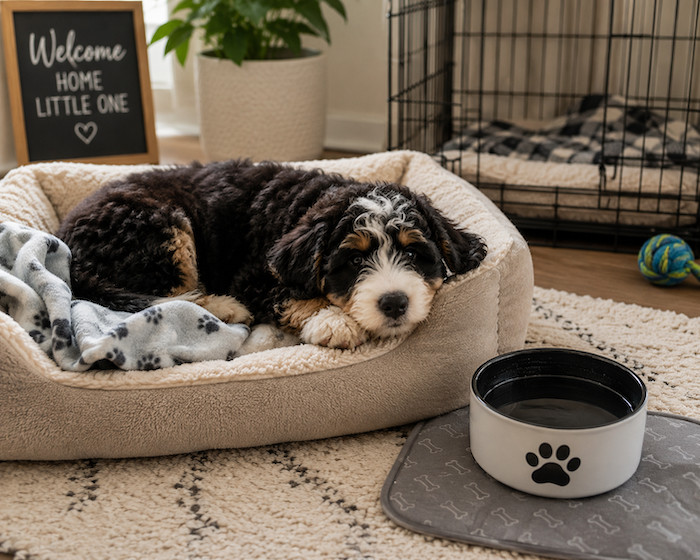
Instead of giving your puppy access to the whole house, start with one puppy-safe area. This might be the kitchen, a playpen, or another easy-to-clean space.
Your puppy does not need to learn the whole house on day one. A smaller area can help them feel more secure and make supervision easier.
Offer water and quiet time
After the ride, offer fresh water and give your puppy time to settle. Some puppies want to play right away. Others may nap. Both are normal.
Try not to schedule visitors on the first day. Let your puppy bond with your immediate family and begin learning the sounds and rhythms of your home.
First Night Tips After Traveling
The first night can be an adjustment for both puppies and families. Your puppy may miss their littermates and familiar surroundings. A calm bedtime routine can help.
Keep bedtime predictable
Before bed, give your puppy a potty break, then place them in their sleeping area. A crate near your bedroom may help your puppy feel less alone while still beginning crate training.
Expect some whining at first. Puppies are learning a new routine. Stay calm and consistent, and remember that the first few nights are part of the transition.
Avoid too much excitement before bed
Evening play is fine, but try to avoid wild activity right before bedtime. A simple routine works best:
- Potty break
- Gentle praise
- Quiet settling time
- Bedtime
The more predictable the routine, the easier it is for your puppy to understand what comes next.
How Our Program Helps
At Red Barn Doodles and More, we want families to feel supported before, during, and after pickup day. Bringing home a puppy is a big decision, and we believe preparation matters.
Our program focuses on ethical breeding, transparency, and helping families choose a puppy that fits their home and lifestyle. We want you to feel comfortable asking questions, learning about our parent dogs, and understanding what to expect as your puppy grows.
We also know that first-time puppy owners often have practical questions: What should we bring? How do we handle the first night? What if our puppy cries in the car? Our goal is to provide guidance without pressure so your family feels confident and prepared.
Plain text anchor suggestions: About, Parents, Contact
A Simple Pickup Day Timeline
Here is an easy timeline you can follow when traveling with a new puppy.
Before you leave home
- Pack your puppy travel checklist
- Prepare the crate or carrier
- Bring water and cleanup supplies
- Confirm directions and pickup time
- Keep the day as simple as possible
At pickup
- Ask any last questions
- Review paperwork or instructions
- Keep greetings calm
- Give your puppy time to adjust
On the drive home
- Keep the puppy secure
- Use quiet voices
- Stop only if needed
- Watch for signs of motion sickness
- Keep the ride calm and direct
When you arrive home
- Go straight to the potty area
- Introduce one small area of the house
- Offer water
- Keep visitors and excitement low
- Begin a gentle routine
Common Mistakes to Avoid
Even well-prepared families can accidentally make pickup day more stressful. Here are a few things to avoid.
Passing the puppy around too much
Everyone will be excited, but too much handling can overwhelm a young puppy. Let your puppy settle before giving everyone lots of cuddle time.
Making unnecessary stops
A new puppy does not need a shopping trip, restaurant stop, or visit with friends on the way home. Go home first and let your puppy rest.
Introducing too many spaces at once
Your puppy does not need to explore the whole house immediately. Start small and expand gradually.
Expecting instant confidence
Some puppies are outgoing right away. Others need more time. A quiet puppy is not necessarily unhappy. They may simply be processing a big change.
Ready to bring home the right puppy for your family?
If you are interested in a Bernedoodle or Doodle puppy, we would love to help you learn more about our program, available puppies, and the application process.
Plain text anchor suggestions: Puppy Application, Puppies for Sale, Contact
FAQ
How long can a new puppy ride in the car?
It depends on the puppy’s age, comfort level, and the length of the trip. For shorter drives, many puppies do fine without stopping. For longer trips, plan calm potty breaks in low-traffic areas and ask your veterinarian for guidance if you have concerns.
Should my puppy ride in my lap on the way home?
A secure crate or carrier is usually the safer choice. Puppies can wiggle, climb, or distract the driver. A crate also gives your puppy a quiet place to settle during the ride.
What should I bring when picking up my puppy?
Bring a crate or carrier, towel or blanket, paper towels, wipes, trash bags, water, a small bowl, leash, and any paperwork you need. It is also smart to bring an extra towel in case your puppy has an accident or gets carsick.
What if my puppy cries during the car ride?
Some crying is normal. Your puppy is experiencing new sights, sounds, and smells. Keep your voice calm, avoid overhandling, and make the ride as quiet and smooth as possible.
Can puppies get motion sickness?
Yes, some puppies can feel carsick, especially during early rides. Signs may include drooling, whining, lip licking, or vomiting. If it continues beyond the first few trips, consult your veterinarian.
What should we do first when we get home?
Take your puppy to their potty area first. Then introduce them to one small, puppy-safe area of your home. Keep the first day calm, simple, and predictable.