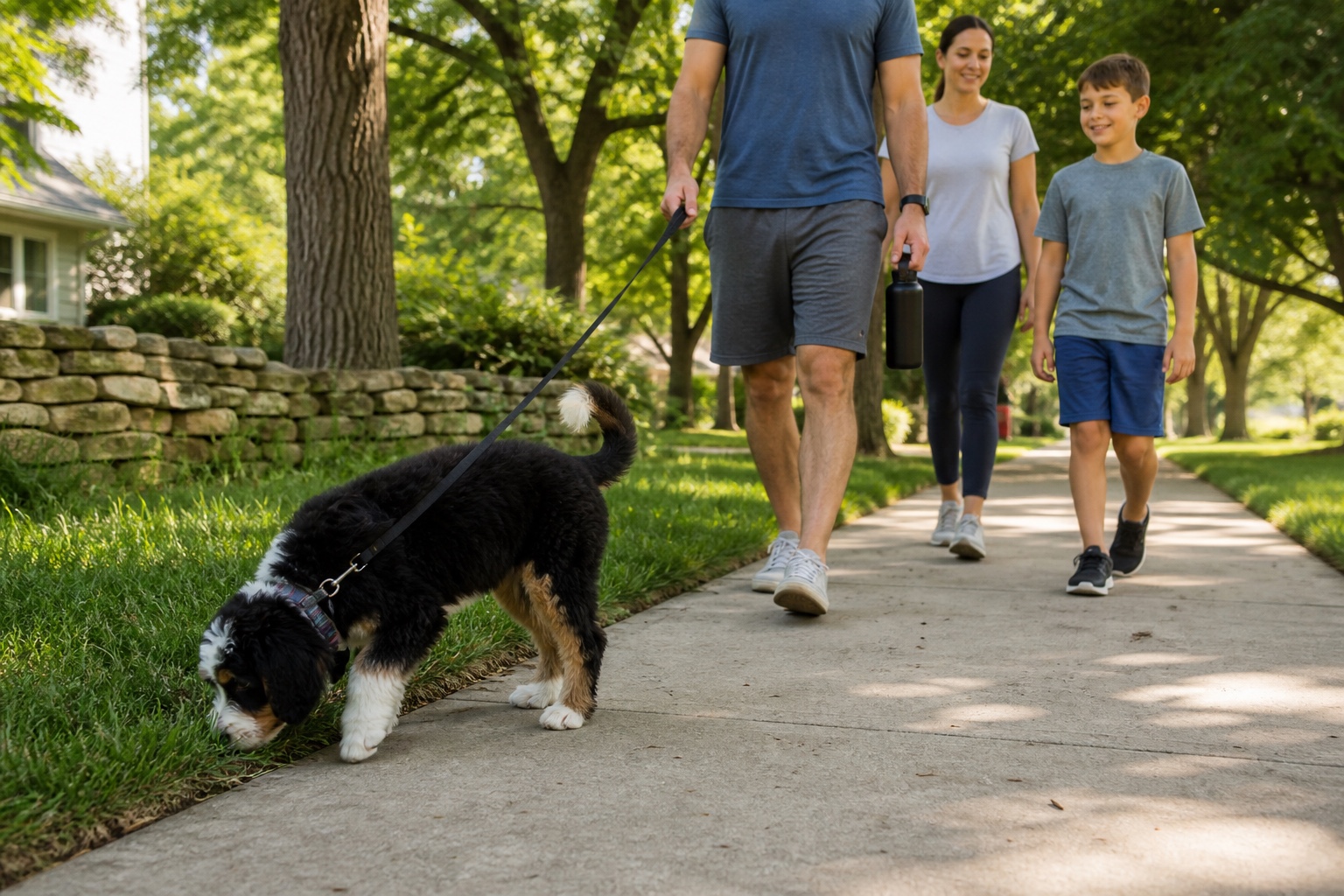
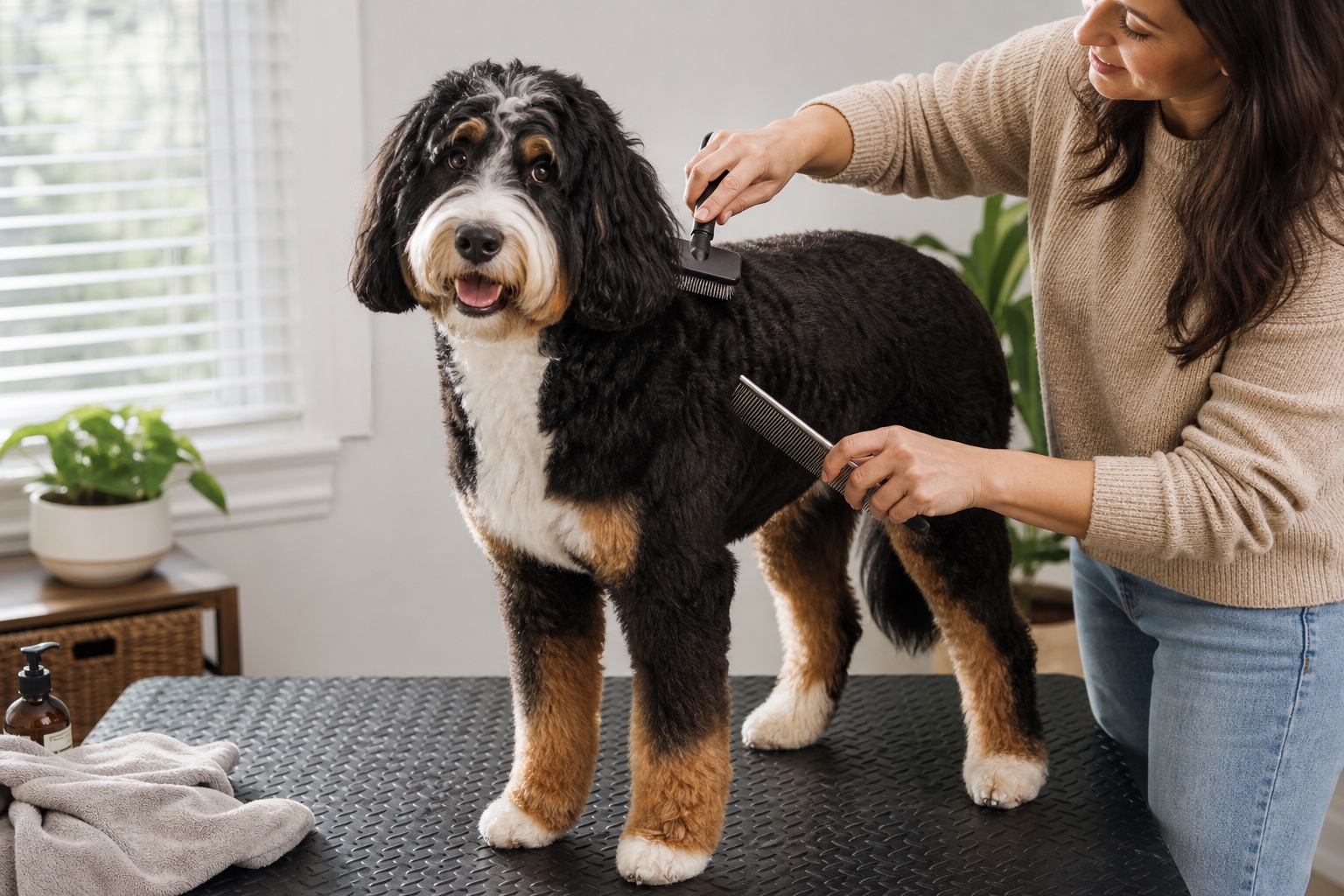
Bringing home a new puppy is exciting—and also a little overwhelming, especially for first-time puppy owners. Your puppy is leaving everything familiar (mom, littermates, breeder routine) and landing in a brand-new environment with new smells, sounds, and people.
The good news: you don’t need to do everything perfectly. You just need a simple plan that helps your puppy feel safe and helps your family stay consistent.
This guide walks you through the first 72 hours with a practical checklist, a realistic routine, and what to focus on for the puppy first night, crate training first week, and building a steady puppy schedule.
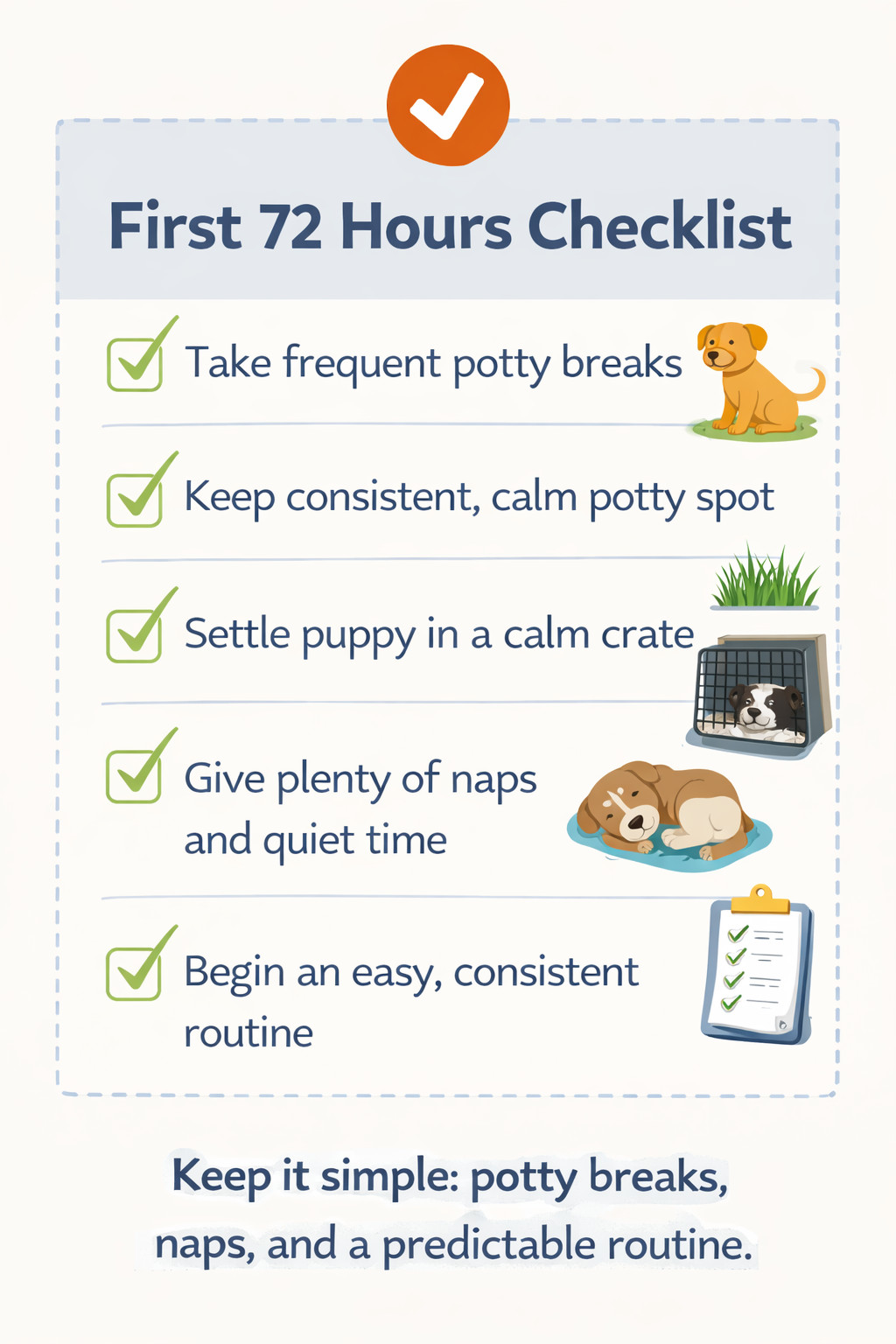
Keep it simple: potty breaks, naps, and a predictable routine.
Why the First 72 Hours Matter
The first few days set the tone for your puppy’s transition. A calm, predictable routine helps your puppy feel secure and helps your family build good habits from the beginning.
Before Pickup: A Quick Checklist (So the First Day Feels Easier)
If you can, set these up before your puppy walks through the door:
Home Setup
- A crate (right size, with a divider if needed)
- A puppy-safe play area (pen or gated room)
- Food + water bowls
- Chew toys (a couple of textures)
- Enzyme cleaner (for accidents)
- A comfy blanket or crate mat
- Collar + leash + ID tag
- Poop bags + paper towels
Family Plan (Simple but Important)
- Decide who handles: potty trips, feeding, crate time, and bedtime
- Pick one potty spot outside
- Agree on house rules (couch? bedrooms? jumping? biting?)
- Choose a short list of words everyone will use (for example: “Outside,” “Crate,” “Yes,” “Off”)
Consistency is what helps puppies learn quickly.
The First Day Home: Keep It Calm and Predictable
Your puppy doesn’t need a big welcome party. The first day should be quiet, gentle, and routine-focused.
What to Do Right Away
- Go straight to the potty spot when you arrive home
- Let your puppy sniff and explore a small area, not the whole house
- Offer water, then a short rest
- Keep interactions soft—low voices, slow movements, short play sessions
What to Avoid on Day One
- Too many visitors
- Overhandling, especially by kids who are excited
- A lot of new places (stores, friends’ houses, etc.)
- Long car rides after pickup
Think “safe and boring” for 24 hours. You’ll have plenty of time for fun later.
Puppy First Night: How to Set Up Bedtime for Success
Most puppies struggle on night one because they’re used to sleeping in a warm puppy pile. That’s normal.
Bedtime Setup
- Place the crate in your bedroom (or right nearby) for the first few nights
- Add a blanket that smells familiar if you have one
- Keep the room dark and quiet
- Plan one last potty trip right before bed
If Your Puppy Cries in the Crate
A little protesting is normal. Your goal is to help them learn: crate = safe, not scary.
Try this order:
- Pause for a moment (sometimes they settle quickly)
- Soft voice reassurance (“Shhh, you’re okay”)
- Gentle crate-side presence (hand near crate, no big excitement)
- If crying escalates and it’s been a while, take a quick potty trip (boring, no play)
Important: don’t turn nighttime potty trips into a party. Keep it quiet and quick.
Many puppies will need at least one overnight potty break at first. That’s not failure—that’s normal puppy development.
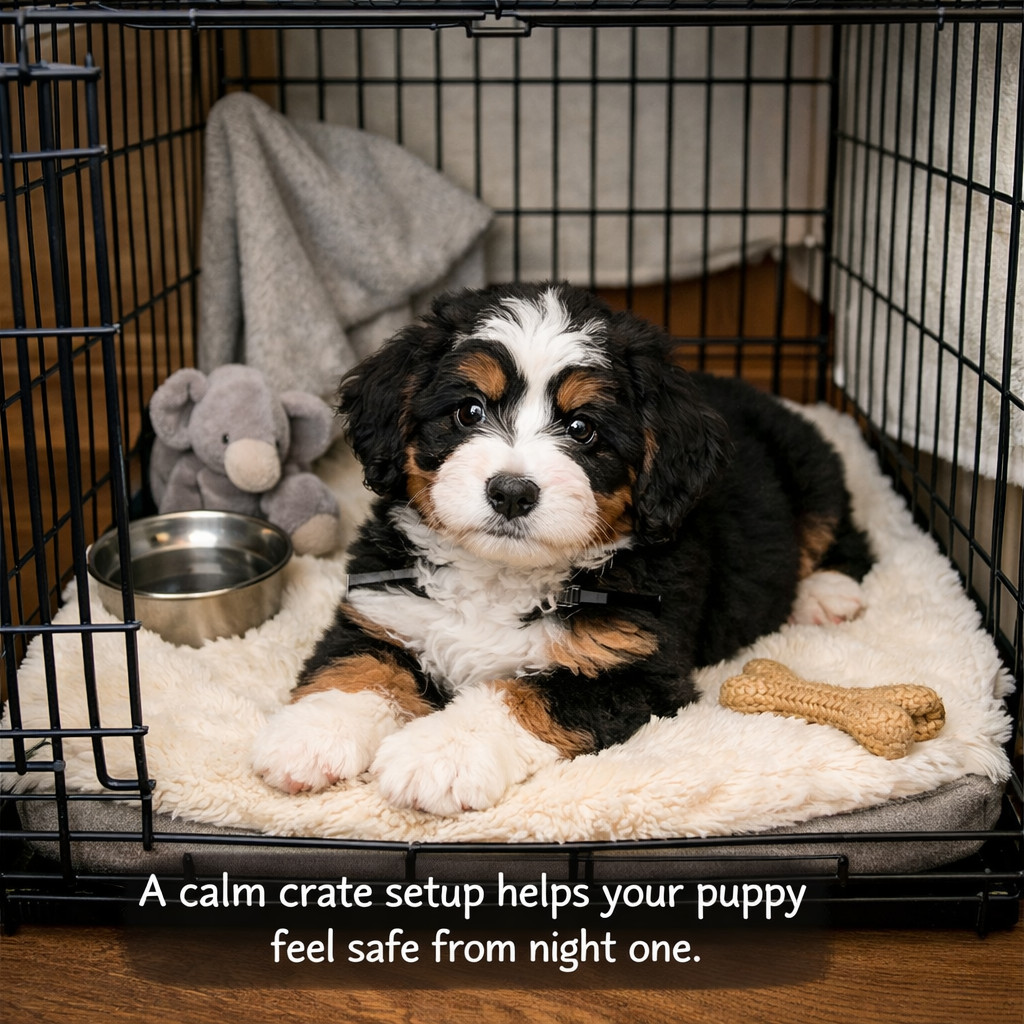
A calm crate setup helps your puppy feel safe from night one.
A Simple Puppy Schedule for the First 72 Hours
A steady routine reduces accidents, improves sleep, and makes training easier.
Potty → play → food/water → potty → nap (crate)
Puppies do best with frequent naps. An overtired puppy often gets extra bitey and wild.
Sample Day Schedule (Adjust to Your Household)
- 7:00am potty + calm greeting
- 7:15am breakfast + water
- 7:30am potty
- 7:45am short play/training (5 minutes)
- 8:00am crate nap
- 9:30am potty + brief play
- 10:00am nap
- 12:00pm lunch + potty
- Afternoon: repeat potty/play/nap cycles
- 5:30pm dinner + potty
- Evening: calm play, short walks in yard, family time
- 9:30–10:30pm last potty + bedtime
If you’re thinking, “That’s a lot of naps,” you’re right—and that’s why it works.
Crate Training the First Week: Focus on Comfort, Not Perfection
For crate training the first week, the goal isn’t a perfect crate dog—it’s a puppy who feels safe resting in the crate.
Crate Training Do’s
- Feed meals near or inside the crate (door open at first)
- Use short crate sessions during the day (5–20 minutes)
- Give a safe chew in the crate (supervised and appropriate for your puppy)
- Praise calm behavior (“Good crate” / “Yes”)
Crate Training Don’ts
- Don’t use the crate as punishment
- Don’t start with long “cry it out” sessions
- Don’t let kids bang on the crate or tease the puppy
A crate is a nap tool and a safety tool. You’re building a positive association, one small step at a time.
House Training in the First 72 Hours: Prevent Accidents Before They Happen
A new puppy doesn’t fully understand your home yet. You’ll get better results by preventing accidents than reacting to them.
When to Take Your Puppy Out (Minimum)
- Immediately after waking up
- After eating
- After playing
- After drinking water
- Every 30–60 minutes at first (varies by puppy)
Potty Training Tips That Actually Help
- Always go to the same potty spot
- Use one cue word (“Outside” or “Go potty”)
- Praise immediately after they finish
- If an accident happens: clean with enzyme cleaner and move on
If you have concerns about potty habits, digestion, or anything health-related, it’s always best to check in with your veterinarian.
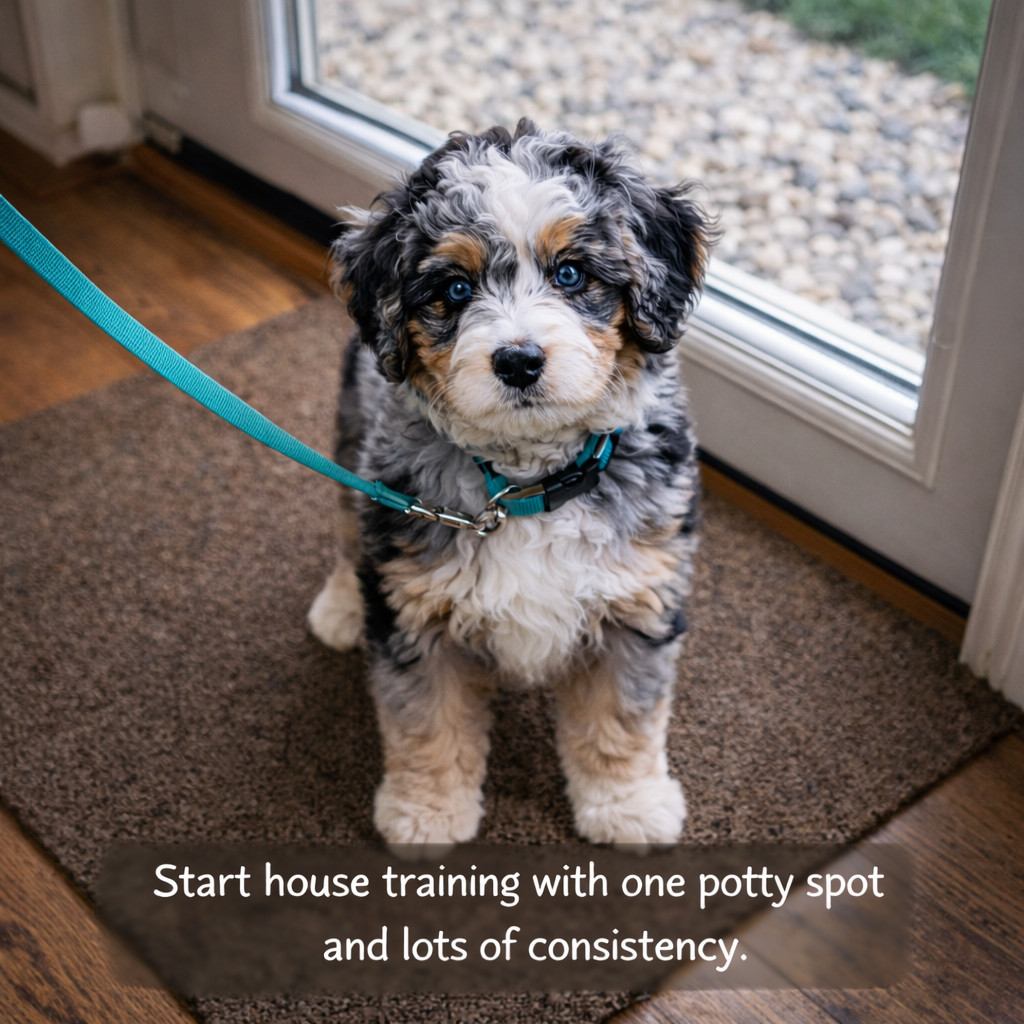
Start house training with one potty spot and lots of consistency.
Questions before pickup? → Contact
Want to see available puppies or upcoming litters? → Puppies for Sale
The First 72 Hours With Kids: Simple Rules That Prevent Stress
Families do great with puppies when the expectations are clear.
Kid-Friendly Rules
- No picking up the puppy without an adult
- No face-to-face hugging (many puppies don’t love it)
- Hands low, voice low
- If the puppy is in the crate: crate means quiet
Give Kids a Job
Assign one simple role:
- Refill water bowl (with help)
- Toss kibble for name game
- Sit quietly and offer treats for calm behavior
This builds a positive relationship fast.
How Our Program Helps
At Red Barn Doodles and More, we want bringing home a puppy to feel exciting—not stressful. We support families by focusing on the things that matter most long-term:
- Ethical breeding and thoughtful pairing decisions
- Transparency about what to expect (temperament, coat, routine, transition tips)
- Support for first-time puppy owners with practical guidance and honest answers
- A family-first approach that prioritizes a smooth handoff and successful first weeks at home
FAQ
How long does it take a puppy to adjust to a new home?
Many puppies start settling in within a few days, but it’s normal for the full adjustment to take a couple of weeks. Consistent routines and calm handling help a lot.
What should I do the first night if my puppy cries?
Keep the crate near you, reassure calmly, and take a quick potty trip if needed. Try not to turn crying into playtime—quiet and boring is best at night.
How often should I take my puppy out in the first few days?
Very often. Plan on after every nap, meal, play session, and at least every 30–60 minutes at first. Puppies improve quickly with consistency.
Should my puppy sleep in the crate right away?
Yes, if possible. The crate helps with safety, house training, and building a predictable routine. Start gently and build positive experiences.
What’s a good puppy schedule for working families?
Short routines work best: potty → short play/training → crate nap. If you’re away, plan a midday break or help so your puppy can potty and reset.
When should I contact my vet after bringing my puppy home?
It’s a good idea to schedule a new-puppy visit soon after bringing them home. If you notice anything unusual with eating, energy, stool, or behavior, contact your veterinarian.
Ready for Next Steps?
Apply here: Puppy Application
Or reach out with questions anytime: Contact
And if you’d like to see current or upcoming puppies: Puppies for Sale