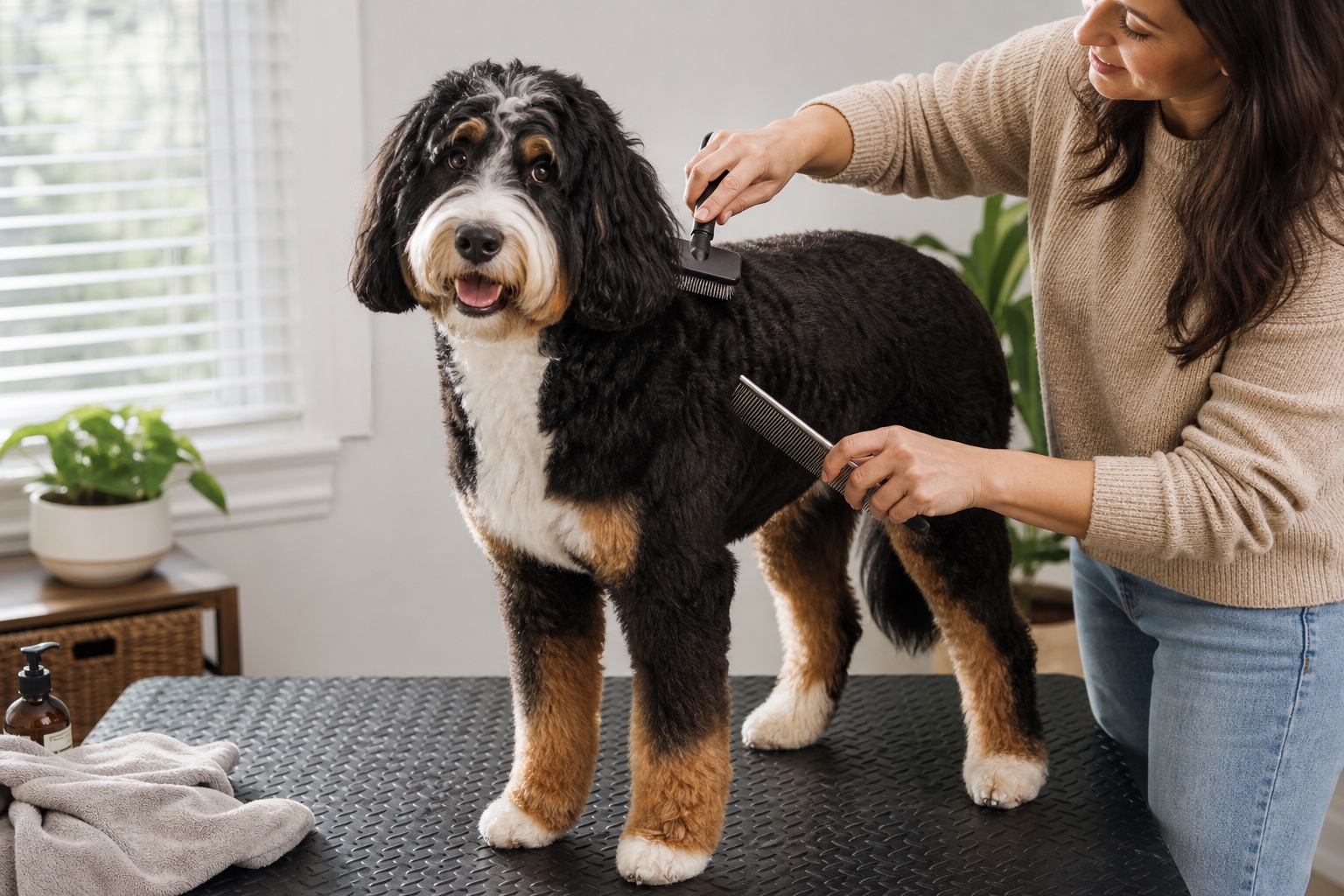
What is a red Bernedoodle?
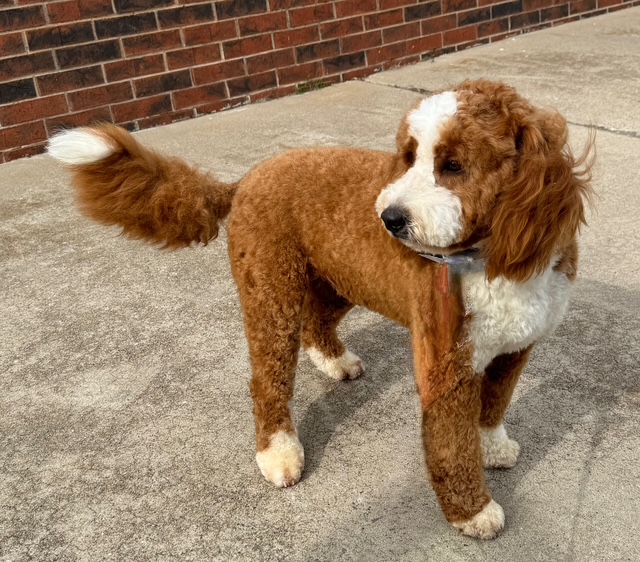
A red bernedoodle is a Bernese Mountain Dog × Poodle mix (or multigenerational Bernedoodle) whose coat falls somewhere in the red family—think deep copper, rich auburn, or warm mahogany. But here’s the key: “red” isn’t always one exact shade, and it doesn’t always stay the same from puppyhood to adulthood.
Many families start by searching for a red bernedoodle puppy because they love that warm, teddy-bear look. That’s totally understandable. Still, it helps to know how color works in doodles so you can choose a puppy with realistic expectations—and avoid surprises as your puppy grows.
“Red” can mean a few different things
When breeders and families say “red,” they often mean one of these:
• Solid red: mostly one shade all over (may still have small white markings)
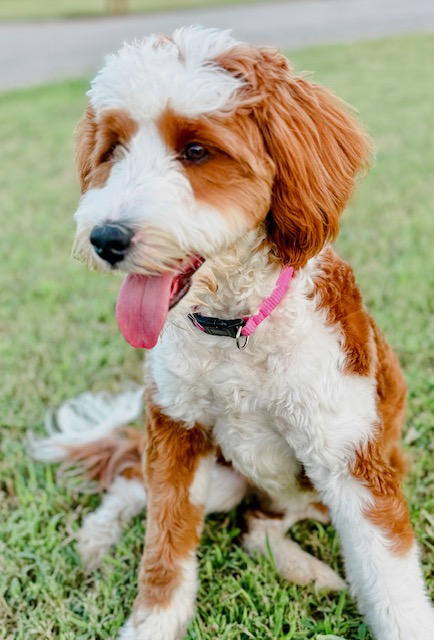
• Red with white markings: common Bernedoodle patterning (chest blaze, chin, paws)
• Red tri-color (or red tri): red base coat + white + darker points (more on this below)
• Red sable: red hairs with darker tips, often giving a shaded or “smoky” look
Because Bernedoodles combine two very different coat/color genetics, “red” can show up in multiple patterns—and it may shift as the coat matures.
Bernedoodle coat colors and patterns (quick guide)
When people research bernedoodle coat colors, they usually see a mix of color and pattern terms. Here’s a simple, family-friendly breakdown:
Common color words you’ll hear
• Red / Copper / Apricot: warm tones ranging from pale to deep
• Black: can be solid or part of a pattern
• Brown / Chocolate: rich brown shades (may fade over time)
• Cream / White: light shades, sometimes with other colors
Common pattern words you’ll hear
• Parti: mostly white coat with large colored patches
• Bi-color: two colors (often black/white, red/white, etc.)
• Tri-color: three colors (usually base + white + points)
• Phantom: two-tone pattern with “points” in specific areas (eyebrows, legs, chest)
A puppy might be described as “red tri,” “red and white,” or “red parti”—and each can look very different.
The rufus gene: what it is (and what it isn’t)
You may see the phrase rufus gene pop up in doodle color discussions. In plain terms, “rufus” is often used to describe genetic modifiers that can intensify or warm up tan/cream points into richer red tones—especially in patterned dogs (like tri-color or phantom).
A few helpful notes:
• It’s less like an on/off switch and more like a dimmer that can deepen warmth.
• It may help explain why one puppy’s points look pale cream while another’s look coppery-red.
• It’s just one piece of a bigger puzzle—other genes and coat changes still matter.
Because genetics are complex, the best approach is practical: look at parents, past puppies, and breeder transparency. That gives you the clearest real-world picture of what “red” may look like in your puppy as they mature.
Will my red Bernedoodle stay red?
Sometimes yes… and sometimes no. Color changes are common in doodle coats, and it’s not a flaw—it’s just part of how these coats develop.
Why red coats can shift over time
Bernedoodles can inherit coat traits from both sides of the family. As puppies grow:
• Their puppy coat sheds and the adult coat comes in
• Some coats lighten, especially in warmer shades
• Some coats develop shading or “highlights”
• Certain coat types can change how the color looks (curl vs wave vs straighter)
If you’re picturing a full grown red bernedoodle, it helps to think in ranges: a puppy who starts deep red may mature into a slightly lighter copper, while another may stay rich and dark. Both can be beautiful—just different.
What to look for if you want a deeper red as an adult
While nothing is guaranteed, these clues can help:
• Parent coat color: especially the Poodle parent’s red depth and whether it held over time
• Older siblings/previous litters: how pups from the same pairing matured
• Puppy’s ear color: ears can sometimes hint at future depth (not a certainty, but a data point)
• Breeder photos in natural light: indoor lighting can distort red tones
A trustworthy breeder will talk through what they’ve seen historically and show real examples—no hype, just honest expectations.
If you’re exploring a red bernedoodle puppy and want to see real photos, color notes, and what to expect as they grow, take a look here:
Or learn how we raise and match puppies with families:
About
Red Bernedoodle coats: curl, wave, or straight?
Color is only half the story—coat type affects grooming needs and everyday life.
Typical Bernedoodle coat types
• Wavy coat: very common; soft, teddy-bear look; regular brushing needed
• Curly coat: more “poodle-like”; often higher grooming needs; tends to mat if neglected
• Straighter coat: more “berner-like”; may shed more; still needs brushing
No matter the coat type, most doodles benefit from:
• a consistent brushing routine
• early, positive grooming practice (touch paws, ears, brushing sessions)
• a relationship with a local groomer once the puppy is old enough
If you’re a first-time puppy owner, don’t worry—you don’t need to be an expert on day one. You just need a plan and support.
Choosing the right red Bernedoodle puppy for your family
Families often start with “We want red,” but the happiest matches usually come from combining color preference with lifestyle fit.
Consider:
• Energy level: are you looking for a playful hiking buddy or a calmer companion?
• Size expectations: mini vs standard lines can impact daily routine
• Coat maintenance: are you ready for brushing + grooming appointments?
• Temperament goals: confident, cuddly, outgoing, kid-friendly—talk through what matters most
A good breeder will help you prioritize fit (temperament, home rhythm, experience level) while still respecting your color preferences.
How our program helps
At Red Barn Doodles and More, our goal is to raise puppies in a way that supports healthy development and confident family transitions—without pressure or gimmicks.
Here’s what that means in practice:
• Ethical breeding choices: we prioritize the overall well-being of our dogs and careful pairing decisions
• Transparency: clear communication, plenty of photos, and straightforward answers about coat/color expectations
• Family support: guidance for first-time owners, plus help with “what to expect” as your puppy grows
• Thoughtful matching: we want the puppy’s temperament and your home to fit well for the long term
If you’re local to Oklahoma (or within driving distance), we also love helping families prepare for a smooth pickup day and first week at home.
FAQ
What makes a Bernedoodle “red”?
“Red” generally refers to warm coat tones like copper, auburn, or deep mahogany. Shade can vary by genetics, lighting, and coat type.
Do red Bernedoodles fade as they get older?
Some do, especially as the puppy coat transitions to the adult coat. Others hold their color well. Looking at parents and past litters is the best way to set expectations.
What is the rufus gene in Bernedoodles?
“Rufus gene” is a common way people describe genetic modifiers that can deepen warm tones, especially in tri-color or phantom-style patterns. It’s one factor among many that influence final color.
What will my full grown red Bernedoodle look like?
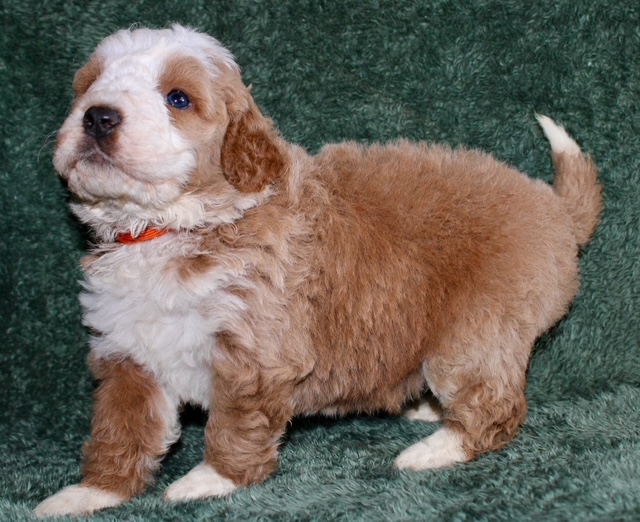
Most mature into a slightly different shade than they were at 8 weeks—sometimes lighter, sometimes with shading, sometimes with more defined markings. Your breeder should be able to share examples from similar pairings.
Are red Bernedoodles good for first-time dog owners?
They can be, as long as the family is ready for training, grooming, and a consistent routine. Your veterinarian can also help you plan age-appropriate care, nutrition, and preventive guidance.
How do I know which puppy is the best match?
Color is fun, but temperament and lifestyle fit matter most. Ask about each puppy’s personality, energy level, and what the breeder has observed so far.
Ready to take the next step?
• Apply to be considered for an upcoming litter: Puppy Application
• Or reach out with questions about red coats, patterns, and what to expect: Contact Us
You can also learn more about our dogs here: Parents and About