Download your 7-Day Puppy Noise Prep Plan Checklist here.
Helping Your Puppy Feel Safer Around Loud Noises
Fireworks, thunder, and sudden loud sounds can be confusing for puppies. One moment the house is quiet, and the next there is a boom outside, flashing light, or rumbling storm. Some puppies barely react. Others may hide, bark, shake, pace, or look to their family for reassurance.
If you are preparing for summer storms or the Fourth of July, it helps to think ahead. Dog fireworks anxiety is not something families want to deal with at the last minute, especially with a young puppy still learning about the world.
The good news is that you can help your puppy build confidence with a simple plan. The goal is not to force your puppy to “get over it.” The goal is to gently introduce sounds, create predictable routines, and give your puppy a safe place to relax.
This 7-day plan is designed for puppies and first-time puppy owners. Keep each session short, positive, and calm. If your puppy shows strong fear or panic, stop and ask your veterinarian or a qualified trainer for guidance.
All Red Barn Doodle & More puppies go through several weeks of ENS (early neurological stimulation) training focused on loud noises, thunder and fireworks. These ENS noises are alternated while puppies are doing their daily crate time.
Why Fireworks and Thunder Can Be Hard for Puppies
Puppies are still learning which sounds are normal and which sounds might be scary. Fireworks and thunder can be especially challenging because they are:
- Sudden
- Loud
- Unpredictable
- Paired with flashes of light
- Often outside the puppy’s control
- Different from everyday household sounds
A puppy may not understand that thunder is harmless or that fireworks are temporary. To them, the noise may feel big, surprising, and unsafe.
That is why early preparation matters. Puppy noise desensitization can help your puppy learn that certain sounds are not a reason to panic, especially when those sounds are introduced gently and paired with positive experiences.
What Dog Fireworks Anxiety Can Look Like
Every puppy responds differently. Some signs are obvious, while others are subtle.
Common signs of noise stress in puppies
Your puppy may:
-
Hide under furniture
-
Bark or whine
-
Tremble or shake
-
Pace around the room
-
Pant even when it is not hot
-
Refuse treats or food
-
Cling to family members
-
Try to escape or scratch at doors
-
Have potty accidents indoors
-
Become unusually still or quiet
A little curiosity or alertness is normal. But if your puppy seems truly frightened, it is best to slow down and make the environment calmer.
Before You Start: Keep Training Gentle
This plan works best when your puppy feels safe. Do not blast loud sounds or force your puppy to stay near something scary. That can make fear worse.
Instead, use short, low-pressure sessions. Think of it as confidence-building, not testing.
Helpful guidelines
-
Start with very low volume
-
Keep sessions short, about 3–5 minutes
-
Pair sounds with treats, toys, or calm praise
-
Stop if your puppy seems overwhelmed
-
Use a normal, relaxed tone of voice
-
Practice before fireworks or storms happen
-
Keep expectations realistic
If your puppy has a severe reaction to fireworks, thunder, or other loud noises, consult your veterinarian. Some dogs need extra support beyond basic training.
Your 7-Day Puppy Noise Prep Plan
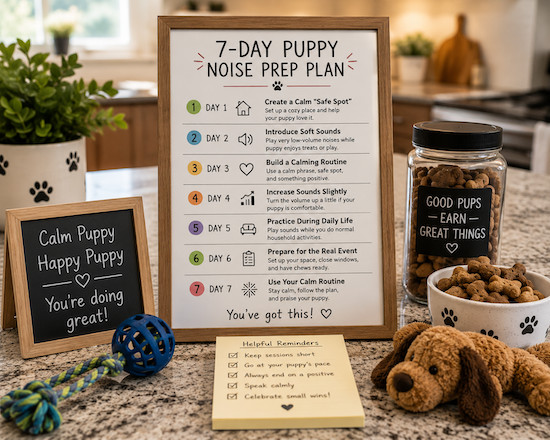
Download your 7-Day Puppy Noise Prep Plan Checklist here.
This simple plan can help your puppy prepare for fireworks, thunder anxiety, and other loud seasonal sounds. You can use it before the Fourth of July, New Year’s Eve, spring storms, or any event where you expect loud noises.
Day 1: Create a Calm “Safe Spot”
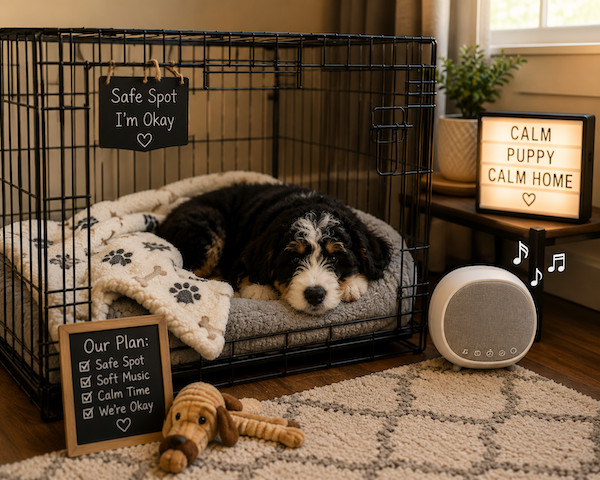
Before working on sounds, set up a quiet place where your puppy can relax. This may be a crate, playpen, bedroom corner, or cozy area away from windows.
What to include
- Comfortable bed or blanket
- Fresh water nearby
- Favorite chew or toy
- White noise machine, fan, or soft music
- Crate cover or light blanket if your puppy likes it
- Easy access for you to check on them
The safe spot should feel peaceful, not like punishment. Let your puppy explore it during normal quiet times, not only when loud noises happen.
Practice goal for Day 1
Spend a few short sessions helping your puppy enjoy the safe spot. Toss a treat inside, offer a chew, or sit nearby while they relax.
The goal is simple: “This is a good place.”
Day 2: Introduce Very Soft Background Sounds
On Day 2, begin puppy noise desensitization at a very low level. Use a recording of fireworks, thunder, or general storm sounds. Keep the volume so low that your puppy notices it only slightly, or not at all.
What to do
Play the sound quietly for 2–3 minutes while your puppy does something positive, such as:
- Eating a few treats
- Playing with a toy
- Working on a simple cue
- Chewing calmly
- Resting near you
Do not make the sound the main event. It should be background noise.
Practice goal for Day 2
Your puppy learns that distant rumbles or pops can happen while life stays normal and safe.
Day 3: Pair Sounds With a Calming Routine
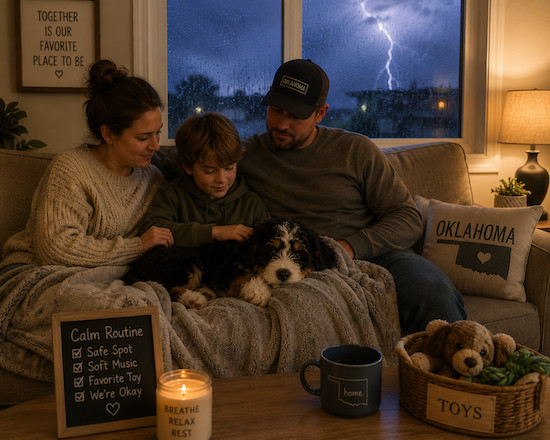
A calming routine gives your puppy a predictable pattern to follow. This can be useful during fireworks, thunder, or other stressful moments.
Try this simple routine
- Say a calm phrase, such as “You’re okay” or “Let’s settle.”
- Guide your puppy to their safe spot.
- Offer a treat, chew, or favorite toy.
- Sit nearby quietly for a few minutes.
Keep your voice soft and normal. You do not need to act overly worried. Puppies often look to their families to understand how they should respond.
Practice goal for Day 3
Your puppy begins to connect a calm phrase and safe spot with comfort and predictability.
Want help preparing your puppy for pickup day and beyond?
We love helping families feel prepared before bringing home a new puppy. If you have questions about routines, early exposure, or what to expect, we are happy to help.
Looking for a family-raised doodle or Bernedoodle puppy in Oklahoma?
You can view current and upcoming puppies here: Puppies for Sale
To learn more about our approach, visit: About and Parents
Day 4: Add Slightly More Real-Life Noise
On Day 4, you can slightly increase the sound level if your puppy handled Day 2 and Day 3 well. The volume should still be comfortable. Your puppy should be able to eat, play, and relax.
Keep it positive
During the sound session, try:
- Gentle play
- A short training game
- Treat scatters on the floor
- A food puzzle
- Calm praise
If your puppy stops eating, hides, or looks worried, lower the volume or stop completely.
Practice goal for Day 4
Your puppy learns that louder sounds can still be paired with good things and calm family behavior.
Day 5: Practice During Normal Household Activity
Fireworks and thunder do not happen in a perfect training environment. On Day 5, practice while normal life is happening around your home.
Play the sounds softly while you:
- Fold laundry
- Make dinner
- Walk through the room
- Open and close cabinets
- Talk in a normal voice
- Let your puppy rest in their safe spot
This helps your puppy learn that noises can happen in the background while the family continues normal routines.
Practice goal for Day 5
Your puppy builds confidence with sound during everyday activity, not just formal training sessions.
Day 6: Prepare for the Real Event
Day 6 is about getting practical. If you know fireworks or storms may happen soon, prepare the environment before the noise starts.
Before fireworks or thunder begin
- Take your puppy out for a potty break early
- Bring your puppy inside before the loudest period
- Close windows and curtains
- Turn on a fan, white noise, or soft music
- Set up the safe spot
- Have treats, chews, and water ready
- Make sure doors, gates, and fences are secure
Many dogs are more likely to run or panic when scared, so double-check your home and yard. Even if your puppy is usually calm, loud noises can lead to unexpected behavior.
Practice goal for Day 6
You are not waiting until your puppy is scared. You are preparing the environment ahead of time.
Day 7: Use the Calm Routine During Real Noises
On Day 7, or during the actual fireworks or storm, use the routine you have practiced.
Keep things calm and simple
Guide your puppy to their safe spot, offer something positive, and stay nearby if that helps them. Some puppies want closeness. Others prefer to settle in their crate or bed. Watch your puppy and respond gently.
What not to do
Avoid:
- Scolding your puppy for being scared
- Forcing them to face the sound
- Taking them outside during fireworks
- Leaving them alone in the yard
- Making the event more exciting than it already is
Comforting your puppy calmly is not the same as “rewarding fear.” A steady, reassuring presence can help your puppy feel safer.
Practice goal for Day 7
Your puppy experiences loud noises with support, structure, and a safe place to settle.
Download your 7-Day Puppy Noise Prep Plan Checklist here.
Extra Tips for Oklahoma Storm Season
In Oklahoma, storms can come with thunder, wind, rain, and sudden weather changes. Fireworks may be seasonal, but thunder anxiety can become a recurring challenge if your puppy has a hard time with storms.
Helpful habits during stormy months
- Watch the forecast when possible
- Potty your puppy before storms arrive
- Keep your puppy indoors during loud weather
- Use background noise to soften thunder
- Keep routines consistent
- Make sure ID tags and microchip information are current
- Ask your veterinarian for advice if reactions are intense
Not every puppy will develop thunder anxiety, but gentle preparation can help your puppy feel more secure when big weather rolls through.
How Our Program Helps
At Red Barn Doodles and More, we know that confident puppies are built through thoughtful care, gentle handling, and honest support for families.
Our program emphasizes ethical breeding, transparency, and helping families understand what to expect as their puppy grows. We want you to feel comfortable asking questions about your puppy’s temperament, early routines, and transition home.
We also believe support should continue beyond pickup day. First-time puppy owners often have questions about crate time, car rides, grooming, feeding, socialization, and new experiences like storms or fireworks. Our goal is to provide helpful guidance without pressure so families feel prepared and supported.
Plain text anchor suggestions: About, Parents, Contact
When to Ask for Extra Help
Mild concern or alertness around loud noises can be normal. But some puppies may need more support.
Consider asking your veterinarian or a qualified trainer if your puppy:
- Panics during loud noises
- Tries to escape
- Cannot settle after the noise stops
- Refuses food for long periods during storms
- Has repeated accidents from fear
- Becomes destructive when scared
- Seems to get worse over time
Your veterinarian can help rule out other concerns and suggest appropriate next steps. A qualified positive-reinforcement trainer can also help you build a customized plan.
Looking for a puppy raised with care and family support?
If you are interested in bringing home a Bernedoodle or Doodle puppy, we would love to answer your questions and help you learn more about our program.
Looking for a family-raised doodle or Bernedoodle puppy in Oklahoma?
You can view current and upcoming puppies here: Puppies for Sale
To learn more about our approach, visit: About and Parents
FAQ
What is dog fireworks anxiety?
Dog fireworks anxiety is a fear or stress response to fireworks or other loud noises. A puppy may bark, hide, shake, pace, cling to family members, or try to escape. Some puppies only show mild concern, while others may need extra support.
Can puppies be trained to handle fireworks and thunder?
Puppies can often become more comfortable with sounds through gentle exposure, positive associations, and calming routines. Start with very low-volume sounds and keep sessions short. If your puppy seems very scared, stop and ask your veterinarian or a qualified trainer for guidance.
How early should I start puppy noise desensitization?
You can begin gentle sound exposure after your puppy comes home, as long as it is low-pressure and positive. The goal is to introduce sounds softly and gradually, not overwhelm your puppy.
Should I comfort my puppy during fireworks?
Yes, calm comfort is okay. Speak softly, offer a safe place, and stay steady. Avoid acting panicked or making the situation overly exciting, but do not ignore a frightened puppy who needs reassurance.
What should I do if my puppy is scared of thunder?
Bring your puppy indoors, close windows and curtains, use background noise, and guide them to a safe resting spot. Offer a chew, toy, or quiet companionship. If thunder anxiety is intense or getting worse, talk with your veterinarian.
Is it safe to take my puppy outside during fireworks?
It is best to avoid taking your puppy outside during active fireworks. Loud noises can startle dogs and increase the risk of bolting. Plan potty breaks earlier, keep doors and gates secure, and keep your puppy indoors during the loudest periods.